
Product Overview
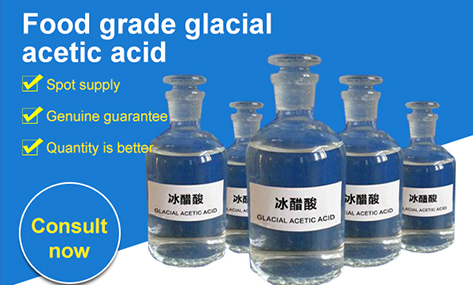
Our Food Grade Glacial Acetic Acid is a high-purity organic compound (CH3COOH) specifically engineered for the food and beverage industry. Recognized as a vital acidity regulator (E260), this colorless liquid is distinguished by its stimulating odor and its unique ability to crystallize into an icy solid below 16.6°C, ensuring a stable and potent source of sourness for various food applications.
Designed for versatility, it serves as a critical ingredient in the production of edible vinegar, compound seasonings, and flavor enhancers. By providing precise control over acidity, it enhances the taste profile and extends the shelf life of a wide array of products, from gourmet sauces and pickled vegetables to soft drinks and confectionery, meeting the strictest safety and quality standards of the global food manufacturing sector.
Detailed Parameters
| Chemical Formula | CH3COOH | Purity Content | ≥ 99.8% |
|---|---|---|---|
| Appearance | Colorless Liquid | Odor | Stimulating/Irritating |
| Melting Point | 16.6 ℃ | Boiling Point | 117.9 ℃ |
| Relative Density | 1.0492 | Refractive Index | 1.3716 |
| Additive Code | E260 | Classification | Edible Acetic Acid |
Key Advantages
Ultra-High Purity
With a purity level of ≥ 99.8%, our product ensures consistent quality and safety for food-grade applications.
Efficient Preservation
Acts as a powerful acidity regulator (E260) to inhibit spoilage and extend product shelf life.
Flavor Enhancement
Provides a clean, sharp sourness ideal for vinegar production and professional seasoning blends.
Wide Application
Versatile use in mayonnaise, tomato sauce, kimchis, cheeses, and various canned goods.
Precise Dilution
Easily diluted to 4-5% concentrations to replicate the flavor of traditional brewed vinegar.
Industry Standard
Fully compliant with food additive regulations, ensuring seamless integration into global supply chains.
Product Gallery
Management Platforms
Quality Control
Strict monitoring of purity levels to maintain the ≥ 99.8% standard across all batches.
Process Optimization
Advanced distillation techniques to ensure the removal of all non-food grade impurities.
Safety Compliance
Adherence to international E-number standards for food additives and safety protocols.
Batch Traceability
Comprehensive tracking system from raw material sourcing to final food-grade delivery.
Storage Management
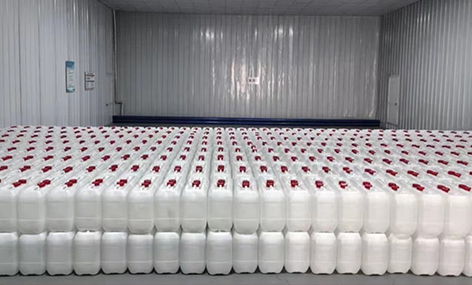
Temperature-controlled environments to manage the crystallization properties of the acid.
Logistics Excellence
Specialized hazardous material transport to ensure safe delivery of concentrated acetic acid.
Investment Return Comparison
| Comparison Metric | Brewed Vinegar | Glacial Acetic Acid (Diluted) | Economic Impact |
|---|---|---|---|
| Production Cost | High (Fermentation) | Low (Direct Dilution) | Significant Reduction |
| Production Time | Weeks (Aging) | Minutes (Mixing) | Faster Turnaround |
| Taste Consistency | Variable | Highly Standardized | Better Quality Control |
| Storage Space | Large (Vats) | Small (Concentrated) | Reduced Warehouse Cost |
| Scalability | Limited by Bio-rate | Instant Scalability | Higher Output Capacity |
Frequently Asked Questions
Food grade acetic acid undergoes more rigorous purification to ensure it is free from toxic contaminants and meets the safety standards for human consumption, specifically listed as E260.
To obtain a flavor similar to brewed vinegar, dilute the glacial acetic acid with water to a concentration of 4-5% and blend with preferred seasonings.
Due to its high purity, acetic acid freezes at 16.6°C. This "icy" crystallization is why it is termed "Glacial" Acetic Acid and is a sign of high concentration.
Yes, once properly diluted, it is commonly used in canned tomatoes, baby food, sardines, and squid as both a flavoring agent and a preservative.
It is primarily used as an acidity regulator, sourness agent, flavor enhancer, and preservative in sauces, pickles, candies, and beverages.
Yes, it can be used as a food flavoring in baked goods, puddings, and gum sugars, provided it is diluted to the appropriate concentration.
Ready to Optimize Your Food Production with High-Purity Acetic Acid?
ContáctenosCONTÁCTENOS
 Spanish
  Belarusian
  Dutch
Dutch  English
  French
  German
  Hindi
Hindi  Indonesian
  Japanese
  Korean
  Lao
Lao  Malay
Malay  Mongolian
  Myanmar
  Polish
  Portuguese
  Russian
  Tagalog
  Thai
Thai  Vietnamese