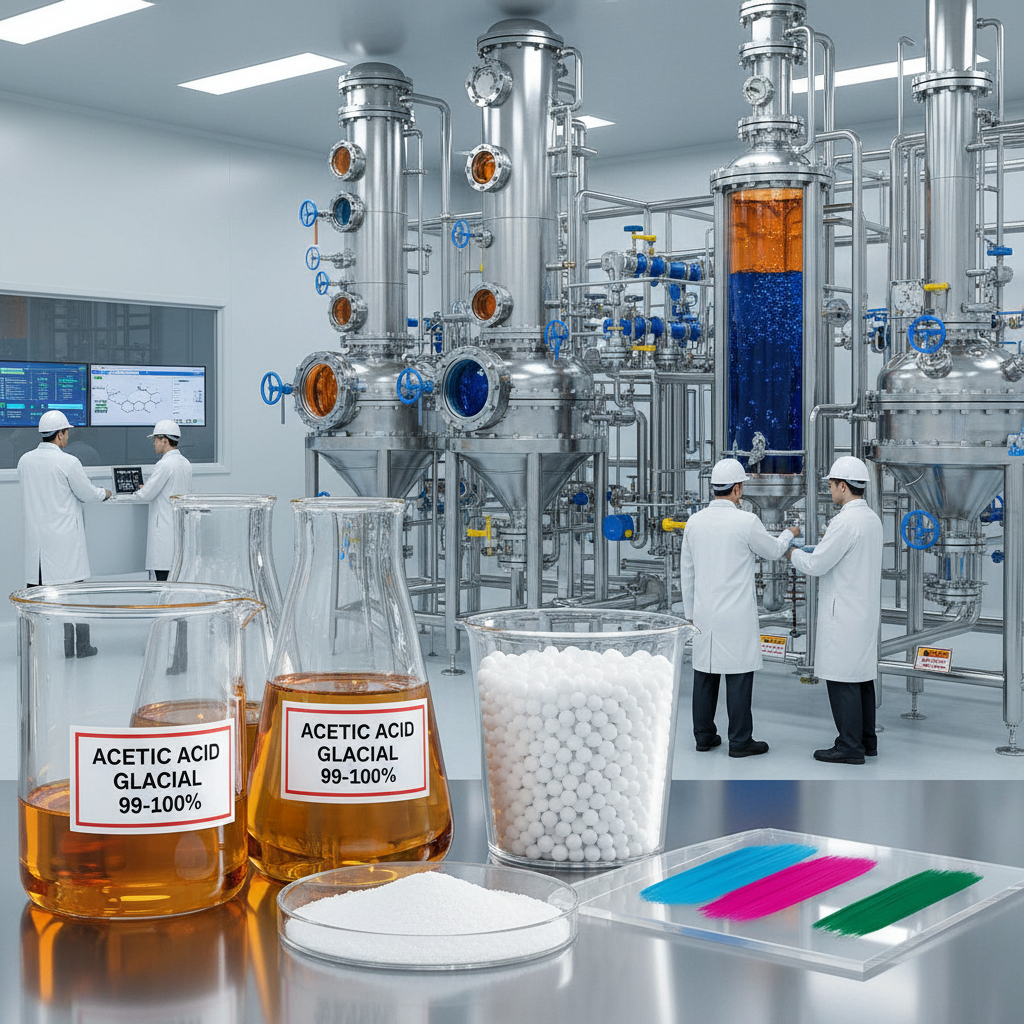
Conc acetic acid, also known as glacial acetic acid due to its appearance when freezing, is a cornerstone chemical in a vast array of industrial processes. Its significance extends from the production of vinyl acetate monomer (VAM), a vital component in paints, adhesives, and textiles, to its role in the manufacturing of cellulose acetate used in photographic film and cigarette filters. Understanding its properties and applications is crucial for professionals in chemical engineering, manufacturing, and environmental science.
Globally, the demand for conc acetic acid continues to grow, driven by expanding economies and increasing consumption of products reliant on its derivatives. The Asia-Pacific region represents the largest and fastest-growing market, particularly in China and India, due to burgeoning industrial sectors. This escalating demand, however, presents challenges related to sustainable production methods and responsible waste management. Innovations in bio-based acetic acid production are gaining traction as a response to these concerns.
The versatility of conc acetic acid makes it an indispensable chemical. Its applications span numerous industries, impacting everyday life from the packaging of food to the production of pharmaceuticals. Efficient and environmentally conscious production and handling of this chemical are essential for continued economic growth and global sustainability. Visiting conc acetic acid provides access to quality products and expert knowledge.
The Importance of Conc Acetic Acid
Conc acetic acid’s significance isn’t limited to its direct applications. It serves as a vital intermediate in the production of countless other chemicals, effectively acting as a building block for a diverse range of materials. Its importance within chemical supply chains cannot be overstated, impacting everything from food preservation to the production of plastics. conc acetic acid suppliers play a critical role in ensuring consistent supply.
The chemical’s high purity and strong acidity make it ideal for various laboratory and industrial processes that demand precise chemical control. The continuous evolution of applications leveraging its unique chemical properties ensures its enduring importance in modern industry and continued research.
Global Context and Production
Global production of conc acetic acid is dominated by a few key players, with China representing the largest producer, accounting for over 50% of worldwide capacity. The United States, Europe, and other Asian countries also contribute significantly to the global supply. Production methods largely rely on methanol carbonylation, a process that utilizes methanol and carbon monoxide in the presence of a catalyst. However, alternative methods, including the oxidation of acetaldehyde and ethylene, are also employed.
According to recent reports from the UN Comtrade database, the global trade volume of conc acetic acid has consistently increased in the last decade, reflecting growing demand from downstream industries. Fluctuations in raw material prices, particularly methanol and carbon monoxide, can influence production costs and market prices. Sustainability concerns are driving interest in bio-based acetic acid production methods, leveraging renewable resources.
The ISO 9001 standard is prevalent among producers, ensuring consistent quality control. Furthermore, responsible handling and transportation of conc acetic acid are paramount, adhering to strict safety regulations outlined by organizations like the International Maritime Organization (IMO) and national regulatory bodies to mitigate risks associated with its corrosive nature.
Defining Conc Acetic Acid
Conc acetic acid (CH3COOH) is a colorless liquid with a pungent, vinegar-like odor. The “glacial” designation refers to its appearance when cooled below 16.6 °C (62 °F), where it solidifies into ice-like crystals. It’s a highly corrosive substance, requiring careful handling and appropriate safety measures. The concentration typically refers to an aqueous solution containing over 99% acetic acid.
Its connection to modern industry lies in its versatile chemical properties. It acts as a solvent, a reagent, and a precursor to various acetate esters and other chemical compounds. From the production of plastics and pharmaceuticals to the synthesis of food preservatives and cleaning agents, conc acetic acid's role is integral to numerous manufacturing processes. conc acetic acid is a foundational material.
Historically, acetic acid was first discovered in vinegar production, dating back to ancient civilizations. Today, it’s produced on an industrial scale through chemical synthesis, enabling the mass production of countless products that enhance the quality of life. Its continued relevance underscores its enduring value in a modern world.
Key Properties of Conc Acetic Acid
One crucial property is its high acidity. This strong acidity makes it an effective catalyst in various chemical reactions and contributes to its efficacy as a cleaning and disinfecting agent. It's also a potent solvent, capable of dissolving a wide range of organic and inorganic compounds. This characteristic is vital in many industrial processes, including the production of polymers and pharmaceuticals.
Another key aspect is its hygroscopicity, meaning it readily absorbs moisture from the air. This property requires careful storage in sealed containers to maintain its concentration and purity. Furthermore, its relatively low flash point necessitates cautious handling to prevent fire hazards.
Comparative Analysis of Conc Acetic Acid Production Methods
Applications Across Industries
The textile industry relies heavily on conc acetic acid in the production of acetate fibers, used in clothing, upholstery, and industrial fabrics. Its role in this sector is crucial for creating materials with desirable properties like softness, drape, and durability. Beyond textiles, it serves as a vital component in the manufacturing of photographic film and acetate plastics, impacting visual media and packaging industries.
Within the food industry, conc acetic acid is employed as a food preservative, preventing spoilage and extending shelf life. Vinegar, a dilute solution of acetic acid, is a common household condiment and food ingredient. The pharmaceutical industry utilizes it in the synthesis of various drug compounds and as a reagent in analytical processes, ensuring product quality and efficacy.
Advantages and Long-Term Value
From a cost perspective, the relatively efficient production processes for conc acetic acid contribute to its affordability, making it a competitive chemical raw material. Its sustainability profile is improving with the development of bio-based production routes, reducing reliance on fossil fuels. This transition aligns with increasing global demand for eco-friendly products and processes.
Socially, the wide range of applications supported by conc acetic acid contributes to improvements in public health (through preservatives and disinfectants) and quality of life (through textiles and pharmaceuticals). Ensuring safe handling and transportation is paramount, building trust and safeguarding communities. The continued investment in research and development promises further innovations and enhanced long-term value.
Future Trends and Innovations
The most prominent trend is the shift towards bio-based acetic acid production, utilizing renewable feedstocks like biomass and agricultural waste. This approach reduces the carbon footprint and promotes a circular economy. Researchers are exploring novel catalytic systems to improve the efficiency and selectivity of these bio-based processes.
Digitalization and automation are also playing an increasing role in optimizing conc acetic acid production. Implementing advanced process control systems and data analytics can enhance efficiency, reduce waste, and improve product quality. The integration of artificial intelligence (AI) can further streamline operations and predict potential issues.
Furthermore, the development of more sustainable packaging materials and closed-loop recycling systems will reduce the environmental impact of conc acetic acid and its derivatives. Continued innovation in these areas will be crucial for ensuring a responsible and sustainable future for the chemical industry.
Analysis of Conc Acetic Acid Production Methods and Sustainability Impact
| Production Method |
Capital Investment |
Environmental Impact |
Production Cost |
| Methanol Carbonylation |
High (8/10) |
Moderate (6/10) |
Low (5/10) |
| Acetaldehyde Oxidation |
Medium (6/10) |
High (7/10) |
Medium (6/10) |
| Ethylene Oxidation |
Medium (7/10) |
Moderate (5/10) |
Medium (7/10) |
| Bio-Fermentation |
Medium (5/10) |
Low (8/10) |
High (4/10) |
| Propylene Carbonylation |
High (9/10) |
Moderate (6/10) |
Medium (6/10) |
| Direct CO2 Conversion |
Very High (10/10) |
Very Low (9/10) |
High (4/10) |
FAQS
Conc acetic acid is highly corrosive and can cause severe burns upon contact with skin or eyes. Inhalation of its vapors can irritate the respiratory system. Always wear appropriate personal protective equipment (PPE), including gloves, safety glasses, and a respirator, when handling. Ensure adequate ventilation and avoid contact with incompatible materials like strong oxidizing agents and bases. Refer to the Material Safety Data Sheet (MSDS) for detailed safety information.
Conc acetic acid has a long shelf life if stored properly. It is hygroscopic, meaning it readily absorbs moisture from the air. To maintain its concentration, store it in tightly sealed, corrosion-resistant containers in a cool, dry, and well-ventilated area, away from direct sunlight and incompatible materials. Regularly inspect containers for leaks or damage.
Glacial acetic acid is used extensively in the production of vinyl acetate monomer (VAM), which is a key ingredient in paints, adhesives, and textiles. It's also crucial in manufacturing cellulose acetate for photographic film and cigarette filters, as well as various acetate esters used as solvents. Other applications include the production of pharmaceuticals, food preservatives, and chemical reagents.
Yes, bio-based acetic acid production is gaining traction as a sustainable alternative. This method utilizes renewable feedstocks, such as biomass and agricultural waste, and fermentation processes to produce acetic acid, reducing reliance on fossil fuels. While still under development, these methods offer a significantly lower carbon footprint and contribute to a circular economy.
The purity of conc acetic acid is critical in many industrial applications. Impurities can interfere with chemical reactions, reduce product yield, or compromise product quality. High-quality conc acetic acid, meeting stringent industry standards, ensures consistent performance and reliable results. Suppliers often provide certificates of analysis to verify purity levels.
The transportation and handling of conc acetic acid are regulated by various national and international organizations. These regulations cover aspects such as packaging, labeling, documentation, and emergency response procedures. Key regulations include those from the International Maritime Organization (IMO) for sea transport and national regulations like those issued by the Department of Transportation (DOT) in the United States.
Conclusion
In summary, conc acetic acid remains an exceptionally versatile and vital chemical compound, serving as a cornerstone in numerous industries and contributing to countless aspects of modern life. Its wide range of applications, from textile production and pharmaceutical synthesis to food preservation and chemical research, underscores its enduring importance. The ongoing shift towards sustainable production methods, coupled with advancements in digital technologies, promises to enhance its efficiency and minimize its environmental impact.
Looking ahead, continued investment in research and development is crucial for unlocking new applications and improving the sustainability of conc acetic acid production. By embracing innovation and adhering to stringent safety and environmental standards, we can ensure its continued value for generations to come. For more information and high-quality products, visit our website: conc acetic acid.



 English
  Belarusian
  Dutch
Dutch  French
  German
  Hindi
Hindi  Indonesian
  Japanese
  Korean
  Lao
Lao  Malay
Malay  Mongolian
  Myanmar
  Polish
  Portuguese
  Russian
  Spanish
  Tagalog
  Thai
Thai  Vietnamese