
Sep . 28, 2025 16:00 Back to list
Food Grade Glacial Acetic Acid-Hebei Yishan|High Purity&Flavor Enhancer
Glacial acetic acid, a key component in the food industry, is a chemical compound with the molecular formula CH3COOH. Known for its high purity and distinct properties, it plays a crucial role in food preservation, flavor enhancement, and the production of various culinary products. This article provides an in-depth analysis of its technical specifications, applications, and advantages, while also highlighting the company background of Hebei Yishan Spices Co., Ltd.
Understanding Food Grade Glacial Acetic Acid
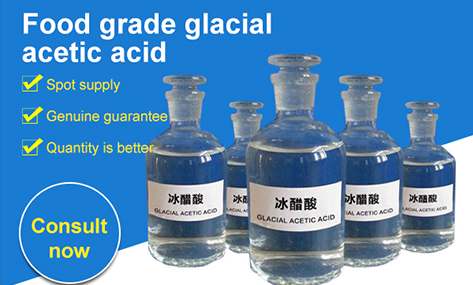
Glacial acetic acid is a food-grade chemical substance that is widely recognized for its role as an acidity regulator in the food industry. It is listed in the E260 category of food additives, which specifies its use as a sourness agent and flavor enhancer. The compound is derived from acetic acid, which is naturally present in vinegar and is a key contributor to its characteristic sour taste and pungent odor.
One of the defining features of glacial acetic acid is its high purity level, with a content of ≥99.8%. This makes it ideal for applications where minimal impurities are required. Additionally, its physical and chemical properties are critical to its functionality. For instance, it has a melting point of 16.6°C, which means it can form an icy solid below this temperature, hence the term "glacial." Its boiling point is 117.9°C, and it has a relative density of 1.0492 and a refractive index of 1.3716. These parameters are essential for quality control and application-specific requirements.
Technical Specifications of Food Grade Glacial Acetic Acid
| Parameter | Specification |
|---|---|
| Molecular Formula | CH3COOH |
| Purity | ≥99.8% |
| Physical State | Colorless liquid |
| Odor | Stimulating/irritating |
| Melting Point | 16.6°C |
| Boiling Point | 117.9°C |
| Relative Density | 1.0492 |
| Refractive Index | 1.3716 |
Applications in the Food Industry
Glacial acetic acid is a versatile ingredient with a wide range of applications in the food industry. Its primary use is as a flavoring agent, where it enhances the sourness and complexity of various food products. When diluted with water to a concentration of 4-5%, it can be used to produce edible vinegar, which closely resembles the flavor of brewed vinegar. This makes it a cost-effective alternative for manufacturers.
Common applications include:
- Seasoning agents: Used in tomato sauce, mayonnaise, rice sugar sauce, and kimchi to add acidity and depth of flavor.
- Canned goods: Employed in canned tomatoes, asparagus, baby food, sardines, and squid to preserve freshness and enhance taste.
- Soft drinks and beverages: Acts as an acid flavoring agent in soft drinks, cold drinks, and candies to balance sweetness and improve shelf life.
- Baked goods and desserts: Used in puddings, gum sugar, and baked goods to provide a tangy flavor and act as a leavening agent.
- Pickles and broths: Enhances the flavor of pickles, broth, and sour cheese by contributing acidity.
Advantages of Using Food Grade Glacial Acetic Acid
There are several advantages to using food-grade glacial acetic acid in food production:
- High Purity: The ≥99.8% purity ensures minimal impurities, making it suitable for sensitive applications.
- Cost-Effective: As a raw material for vinegar production, it offers a more economical solution compared to traditional brewing methods.
- Extended Shelf Life: Its acidic nature helps inhibit microbial growth, extending the shelf life of food products.
- Flavor Enhancement: Adds a distinct sourness that complements various culinary profiles.
- Regulatory Compliance: Recognized as a food additive under E260, ensuring compliance with international food safety standards.
Company Background: Hebei Yishan Spices Co., Ltd.
Hebei Yishan Spices Co., Ltd., based in Shijiazhuang City, Hebei Province, is a reputable manufacturer specializing in food-grade chemicals, including glacial acetic acid for sale. The company is committed to providing high-quality products that meet global standards. With a focus on innovation and customer satisfaction, Hebei Yishan has established itself as a trusted supplier in the food industry.
As a glacial acetic acid supplier, the company adheres to strict quality control measures to ensure its products meet the required specifications. Its anhydrous acetic acid and glacial acetic acid NFPA are widely used in various applications, from food production to industrial processes. For more information about their products, visit the product page.
Ensuring Safety and Quality
Given its irritating odor and chemical nature, proper handling and storage are essential. The glacial acetic acid price may vary based on purity and quantity, but its value as a multifunctional ingredient justifies the investment for manufacturers. According to NIST, accurate measurements and standards are critical for ensuring the safety and efficacy of chemical substances in food applications. This aligns with Hebei Yishan's commitment to quality and compliance.
Conclusion
Food-grade glacial acetic acid is an indispensable component in modern food production. Its unique properties, high purity, and versatility make it a preferred choice for manufacturers seeking to enhance flavor, preserve freshness, and meet regulatory standards. Hebei Yishan Spices Co., Ltd. continues to lead in providing reliable and high-quality solutions for the food industry. For further details about their glacial acetic acid suppliers or anhydrous acetic acid, visit the company page.
References
National Institute of Standards and Technology (NIST). (n.d.). Retrieved from https://www.nist.gov/
-
Industrial Applications and Properties of 75 acetic acid Solution
NewsApr.16,2026
-
Properties and Industrial Applications of 64 19 7 acetic acid
NewsApr.09,2026
-
Comprehensive Guide to 56 Acetic Acid Applications and Reliable Sourcing
NewsApr.07,2026
-
Comprehensive Guide to 5 Glacial Acetic Acid for International Trade and Industrial Applications
NewsApr.04,2026
-
Exploring 100 Acetic Acid Properties Applications and Reliable Sourcing
NewsMar.31,2026
-
Comprehensive Guide to 10 Glacial Acetic Acid Properties and Applications
NewsMar.28,2026
 English
  Belarusian
  Dutch
Dutch  French
  German
  Hindi
Hindi  Indonesian
  Japanese
  Korean
  Lao
Lao  Malay
Malay  Mongolian
  Myanmar
  Polish
  Portuguese
  Russian
  Spanish
  Tagalog
  Thai
Thai  Vietnamese