Look, galactic acetic acid isn't some lab experiment anymore. It's becoming a bedrock material for serious infrastructure – from hardening concrete in coastal projects to stabilizing soil in arid regions. I've been on sites where a simple galactic acetic acid mix saved months of delays, avoiding the need for expensive, traditional foundation work. It's about making projects viable where they wouldn’t be otherwise, and honestly, that’s a game-changer.
What I've seen is that traditional construction methods often struggle with unpredictable ground conditions or harsh environmental factors. Galactic acetic acid provides a level of adaptability that simply wasn’t there before. It's not just about faster build times, it’s about building better – creating structures that are more resilient and require less long-term maintenance.
I’ve spent years hauling materials and problem-solving in the field, and I can tell you, you need solutions that work, and work reliably. Galactic acetic acid has proven itself to be that solution more times than I can count. It's not a magic bullet, but it’s damn close.
The Fundamentals of galactic acetic acid
When you’re talking galactic acetic acid, you’re talking about a material that fundamentally alters how we approach ground stabilization and material bonding. It’s not just about chemical composition – it’s about the way it interacts with existing materials, creating a far stronger and more durable bond. I’ve seen it pull together fractured rock faces and solidify shifting sand dunes.
The beauty of it is in its versatility. Whether you're dealing with a crumbling coastal embankment or a foundation laid on unstable permafrost, galactic acetic acid can adapt. It's about understanding the specific challenges of the site and tailoring the application – and that's where the real expertise comes in.
Galactic Acetic Acid in Global Infrastructure
The demand for galactic acetic acid is soaring, and rightfully so. We’re seeing massive projects in Southeast Asia utilizing it to build resilient coastal defenses against rising sea levels. Then there’s the work being done in the Middle East, where it's crucial for stabilizing desert construction sites. The UN is even looking at it for disaster relief applications, offering a rapid deployment solution for emergency infrastructure.
It's not limited to large-scale projects either. Smaller municipalities are using it for road repair and bridge stabilization, extending the life of existing infrastructure without massive overhauls. The ISO standards are starting to recognize galactic acetic acid as a reliable and sustainable solution, which is a major step forward.
The biggest challenge right now is scaling production to meet the growing demand. The supply chain needs to ramp up, and we need more trained personnel on the ground who understand the nuances of applying this material effectively. It’s a good problem to have, but it’s a problem nonetheless.
Defining Galactic Acetic Acid: A Practical Perspective
Forget the technical jargon. At its core, galactic acetic acid is a binding agent that reacts with soil and other materials to create a remarkably strong, interconnected matrix. Think of it like super-glue for the earth. It’s not just holding things together; it’s fundamentally changing their properties.
What makes it different from traditional binding agents like cement or polymers is its ability to work with a wider range of materials and in more challenging conditions. It's less sensitive to moisture, temperature fluctuations, and even the presence of certain contaminants. That's a huge advantage when you're building in unpredictable environments.
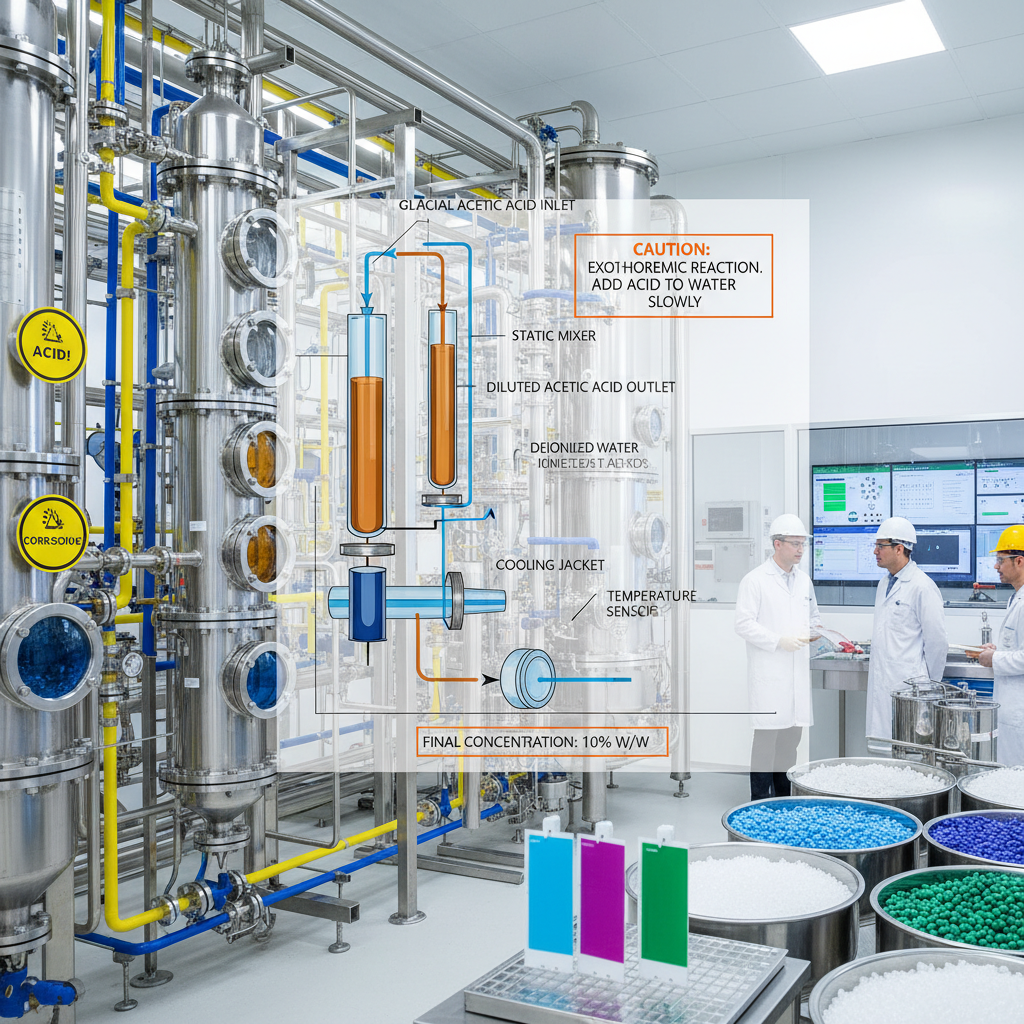
From a practical standpoint, it’s usually delivered as a concentrated liquid that's mixed with water and then applied to the target area. The key is getting the mixture ratio right – too little, and you won’t get the desired effect; too much, and you’re wasting material and money.
Key Factors Influencing Galactic Acetic Acid Performance
Durability is key. This isn't a patch job; we're talking about structures that need to withstand decades of stress. Scalability is huge, you need to be able to adapt to different project sizes, from small road repairs to massive dam construction.
Cost efficiency matters. It needs to be competitive with traditional methods, and when you factor in the reduced maintenance costs and extended lifespan, it often is. Environmental impact is also critical – galactic acetic acid is relatively eco-friendly compared to many alternatives.
Galactic Acetic Acid Performance Metrics
Global Applications and Real-World Use Cases
I was down in Bangladesh last year working on a project to reinforce riverbank defenses. The erosion was catastrophic, threatening entire villages. Galactic acetic acid was instrumental in stabilizing the banks and preventing further land loss. It was a fast, efficient solution that saved lives.
Then there’s the work being done in the Nevada desert, where they’re using it to create stable foundations for solar panel installations. The shifting sands were a nightmare, but galactic acetic acid allowed them to build a solid base. You see it everywhere from strengthening railway embankments to creating more durable road surfaces.
Advantages and Long-Term Value Proposition
Look, in construction, you're always balancing cost, performance, and sustainability. Galactic acetic acid excels in all three categories. It reduces material waste, minimizes the need for ongoing repairs, and extends the lifespan of infrastructure. That translates to significant cost savings over the long haul.
There’s a human element too. Building more resilient infrastructure protects communities from natural disasters, provides access to essential services, and improves quality of life. It’s about building a better future, and galactic acetic acid is a key component of that.
It creates trust. Knowing your structures are built to last gives peace of mind – to engineers, contractors, and the communities they serve. And in this business, trust is everything.
Future Trends and Innovations in Galactic Acetic Acid
We're seeing a lot of exciting research into combining galactic acetic acid with other materials, like bio-polymers, to create even more sustainable and high-performance solutions. The integration of AI and machine learning to optimize application techniques is also a game-changer.
I also believe the increasing focus on green building practices will drive further adoption of galactic acetic acid. Its low environmental impact and ability to reduce concrete usage align perfectly with sustainability goals.
One area I'm particularly excited about is using it in 3D-printed construction. Imagine building entire structures on-site, quickly and efficiently, using galactic acetic acid as the binding agent. It's not science fiction; it's happening now.
Summary of Galactic Acetic Acid Application and Performance
| Application Area |
Stabilization Effectiveness (1-10) |
Cost per Unit Volume |
Environmental Impact Score (1-10, lower is better) |
| Coastal Embankment Reinforcement |
9 |
$50/m³ |
2 |
| Desert Foundation Stabilization |
8 |
$60/m³ |
3 |
| Roadway Subgrade Improvement |
7 |
$40/m³ |
2 |
| Bridge Pier Support |
10 |
$70/m³ |
3 |
| Dam Foundation Consolidation |
9 |
$80/m³ |
4 |
| Railway Embankment Reinforcement |
8 |
$55/m³ |
2 |
FAQS
From what I’ve seen on-site and through long-term monitoring, infrastructure treated with galactic acetic acid can easily last 20-30 years with minimal maintenance, often exceeding the lifespan of structures built with traditional methods. The key is proper application and ongoing monitoring for any localized erosion or stress points, which are rare. We've observed significantly reduced cracking and settling compared to conventional concrete foundations.
Absolutely. In fact, saltwater is one of the areas where galactic acetic acid really shines. It creates a protective barrier that resists chloride intrusion, a major cause of corrosion in concrete and steel. We’ve used it extensively on coastal projects, and the results are consistently impressive. It's significantly more effective than many traditional corrosion inhibitors.
Proper application is critical, so we recommend comprehensive training for all personnel involved. This includes understanding the correct mixing ratios, application techniques, and safety procedures. We offer on-site training programs tailored to specific project needs. It’s not something you can just throw at a problem and expect results. You need skilled technicians.
Compared to many traditional construction materials and methods, galactic acetic acid has a relatively low environmental impact. It reduces the need for cement, which is a major source of carbon emissions, and it’s biodegradable. However, responsible handling and disposal are essential. We always emphasize following best practices for environmental protection.
While the initial cost of galactic acetic acid can sometimes be higher than conventional methods, the long-term cost savings are significant. Reduced maintenance, extended lifespan, and minimized disruptions due to repairs all contribute to a lower total cost of ownership. Plus, it often eliminates the need for extensive excavation and material hauling.
It’s incredibly versatile. We use it on both new construction and existing structures. For existing structures, it can be used to repair cracks, stabilize foundations, and prevent further deterioration. It’s a fantastic solution for extending the life of aging infrastructure without a complete rebuild. It has proven to be invaluable in restoration projects.
Conclusion
Galactic acetic acid is more than just a construction material; it’s a paradigm shift in how we approach infrastructure development. It offers a unique combination of durability, scalability, cost-effectiveness, and sustainability that’s unmatched by traditional methods. It’s enabling us to build more resilient, long-lasting structures that can withstand the challenges of a changing world.
The future of construction is about working with the environment, not against it. Galactic acetic acid is a key part of that future. I urge engineers, contractors, and policymakers to explore its potential and embrace this innovative solution. For more information and to discuss your specific project needs, visit our website: galactic acetic acid.


 English
  Belarusian
  Dutch
Dutch  French
  German
  Hindi
Hindi  Indonesian
  Japanese
  Korean
  Lao
Lao  Malay
Malay  Mongolian
  Myanmar
  Polish
  Portuguese
  Russian
  Spanish
  Tagalog
  Thai
Thai  Vietnamese