
Oct . 01, 2025 13:10 Back to list
Glacial Acetic Acid for Sale: High Purity, Best Price?
Food Grade Glacial Acetic Acid: Market Snapshot, Specs, and Buyer’s Guide
If you’re scanning the market for glacial acetic acid for sale, you’re not alone. Demand has ticked up this year—especially from beverage blenders, pickle lines, and contract sauce makers chasing predictable acidity and a clean label (E260). In fact, food teams are quietly standardizing on higher-purity, tighter-color specs because shelf-life pressure is real.
What it is and why it matters
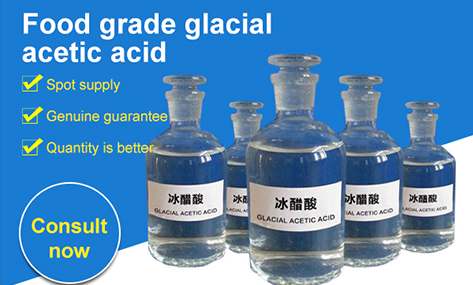
Glacial acetic acid (CH3COOH, CAS 64-19-7) is the concentrated form of the molecule behind vinegar’s tang. Food-grade material is purified for direct use as an acidity regulator (E260) across beverages, pickles, condiments, and certain bakery lines. It sounds simple, but the difference between “good enough” and “great” often shows up in color (APHA), trace metals, and consistency lot to lot.
Product snapshot
| Product name | Food grade glacial acetic acid |
| Purity (GC) | ≥ 99.8% (typical 99.9%) |
| Water (Karl Fischer) | ≤ 0.20% |
| Color, APHA (Pt–Co) | ≤ 10 (fresh fill ≈ 5) |
| Heavy metals (as Pb) | ≤ 2 mg/kg |
| Aldehydes | ≤ 0.05% |
| Compliance | E260, FCC, Codex specifications |
| Shelf life | 24 months unopened; real-world use may vary |
| Origin | 200 m NE of East Airport Rd & Airport North St., Yangma Village, Zengcun Town, Gaocheng District, Shijiazhuang, Hebei |
Process flow, QC, and service life
- Materials: food-grade acetic acid stream refined via fractional distillation and polishing.
- Methods: multi-stage distillation, activated carbon decolorization (as needed), fine filtration.
- Testing: purity by GC (FCC); water by Karl Fischer (ISO 760); color by APHA (ASTM D1209); metals by ICP-OES; identification and acidity per FCC/Codex.
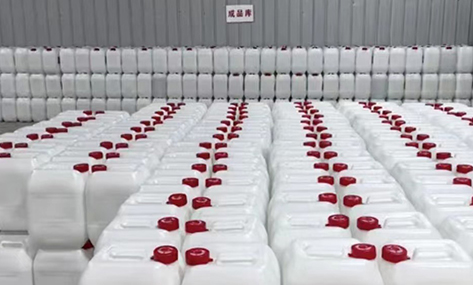
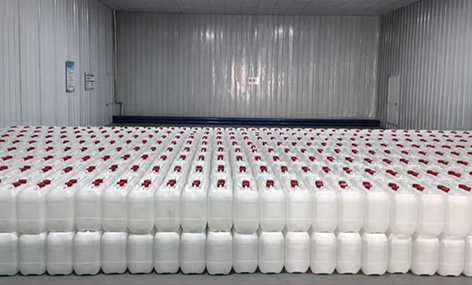
- Packaging: HDPE drums/IBCs with food-contact liners; nitrogen blanketed for color stability.
- Service life: up to 24 months unopened, cool storage; after opening, reseal and use FIFO—color drift can creep in.
- Certifications: typically ISO 9001; food-safety systems such as HACCP/FSSC 22000 when integrated with food customers.
Where it’s used (and why)
- Foods & beverages: pH control in sauces, pickles, dressings, RTD beverages; clean-label acidity (E260).
- Fermentation: buffering media; to be honest, teams like its predictability vs. vinegar variability.
- Pharma/excipients: controlled pH in certain processes—always check pharm-grade needs.
- Household/industrial: flavor vinegar compounding, textile finishing (restricted to food-grade lines when applicable).
Advantages that buyers mention: consistent APHA, low aldehydes, and fewer “surprise notes” in delicate beverages. Many customers say that’s what moves the needle on shelf-life curves.
Who should you buy from? Quick vendor snapshot
| Vendor | Certs | Lead time | MOQ | Typical price (FOB) | Customization |
| YSXL Chemicals (Hebei) | ISO 9001; HACCP/FSSC (on request) | 7–14 days | 1 MT | ≈ $750–$920/MT | APHA ≤ 10; private label; drum/IBC |
| GlobalChem Co. | ISO 9001, ISO 14001 | 2–3 weeks | 5 MT | ≈ $820–$1,000/MT | Standard packs |
| EuroAcetix | ISO 9001; IFS Broker | Stock/2 weeks | Pallet | ≈ €850–€980/MT | Docs focus |
Prices swing with methanol/CO value chains and freight. I guess the smart play is locking quarterly volumes.
Case notes from the field
- Beverage plant (ASEPTIC RTD tea): switching to APHA ≤ 10 cut haze complaints by ≈18% over 4 months; microbial plate counts unchanged (as expected), but flavor “cleanliness” scored +0.4 on sensory panel.
- Pickle line (private label): tighter aldehydes (≤ 0.05%) reduced “painty” off-notes; returns fell from 0.9% to 0.5% batch average. To be honest, that’s big for retailers.
Buying tips and safety
- Ask for recent COA and methods: FCC-aligned GC, ISO 760, ASTM D1209. It seems basic, but you’d be surprised.
- Verify food-contact packaging and lot traceability; check allergen and GMP statements.
- Handle as a corrosive: PPE, ventilation, and segregated storage. Always follow SDS.
If you need glacial acetic acid for sale with consistent color and a food-safe chain of custody, YSXL’s Hebei site ships reliably out of Gaocheng District and can tailor APHA and pack sizes. Many customers say the straightforward paperwork alone is worth the call.
Authoritative references
- Food Chemicals Codex (FCC) Monograph: Acetic Acid, latest edition, USP.
- Commission Regulation (EU) No 231/2012—Specifications for food additive E 260 (acetic acid).
- ISO 760: Determination of water—Karl Fischer method (general method).
- ASTM D1209: Standard Test Method for Color of Clear Liquids (Platinum–Cobalt Scale).
- Codex Alimentarius GSFA—Acidity regulators: acetic acid (INS 260).
-
Industrial Applications and Properties of 75 acetic acid Solution
NewsApr.16,2026
-
Properties and Industrial Applications of 64 19 7 acetic acid
NewsApr.09,2026
-
Comprehensive Guide to 56 Acetic Acid Applications and Reliable Sourcing
NewsApr.07,2026
-
Comprehensive Guide to 5 Glacial Acetic Acid for International Trade and Industrial Applications
NewsApr.04,2026
-
Exploring 100 Acetic Acid Properties Applications and Reliable Sourcing
NewsMar.31,2026
-
Comprehensive Guide to 10 Glacial Acetic Acid Properties and Applications
NewsMar.28,2026
 English
  Belarusian
  Dutch
Dutch  French
  German
  Hindi
Hindi  Indonesian
  Japanese
  Korean
  Lao
Lao  Malay
Malay  Mongolian
  Myanmar
  Polish
  Portuguese
  Russian
  Spanish
  Tagalog
  Thai
Thai  Vietnamese