
Oct . 10, 2025 12:10 Back to list
Glacial acetic acid for sale: pure, bulk, best price?
Food Grade Glacial Acetic Acid: Sourcing Guide, Specs, and Real-World Use
If you’re scanning the market for glacial acetic acid for sale, here’s the candid, industry-side view I wish more buyers saw. Prices move, purity claims can be fuzzy, and certifications matter more than marketing. Below is what I’ve learned from plant walk-throughs and production audits (yes, including a chilly morning in Hebei).
Product snapshot
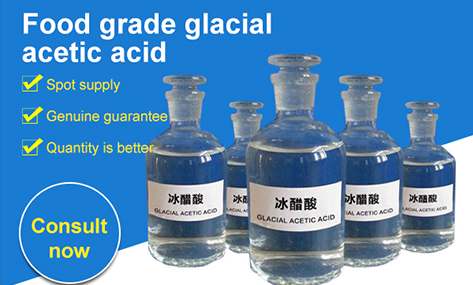
Product: Food grade glacial acetic acid (E260). Origin: 200 meters northeast of the intersection of East Airport Road and Airport North Street in Yangma Village, Zengcun Town, Gaocheng District, Shijiazhuang City, Hebei Province. It’s a clean, colorless liquid with the sharp, vinegary note you’d expect—though, to be honest, in concentrated form the odor is decidedly assertive.
Typical specifications (food-grade, export-ready)
| Purity (acetic acid) | ≥99.8% (GC, FCC-aligned) |
| Water (Karl Fischer) | ≤0.20% |
| Color | ≤10 APHA (≈ clear) |
| Aldehydes (as acetaldehyde) | ≤0.05% |
| Heavy metals (as Pb) | ≤1 mg/kg |
| Non-volatile residue | ≤0.005% |
| Shelf life | ≈24 months sealed, cool, dry |
Note: real-world results may vary slightly by lot; request a current COA and micro statement.
How it’s made (short version)
Two mainstream routes: synthetic carbonylation (methanol + CO via modern Cativa/Monsanto catalysts) and bio-fermentation (acetic acid bacteria). For consistent food-grade volumes, most suppliers use the synthetic route, then tighten specs via fractional distillation, activated carbon polishing, and fine filtration. Final QA: GC assay, KF for moisture, APHA color, ICP-MS for metals, and a peroxide/permanganate time test. Labs are typically ISO/IEC 17025 accredited—ask for the scope, seriously.
Certifications you should see: FCC/INS 260 conformity, HACCP, ISO 22000/FSSC 22000 for food safety, ISO 9001 for QMS, plus SDS and REACH registration for the EU.
Application scenarios (with field notes)
- Acidulant in pickles, sauces, dressings; pH trimming in beverages and RTD teas.- Bakery mold control when used with propionates—surprisingly effective in humid seasons.
- Brewing/CIP: descaling and biofilm control (diluted).
- Flavor balancing where a bright, clean acid is needed versus citrus notes.
Usage levels must follow local regs and product formulation trials. Never ingest undiluted concentrate—corrosive.
Industry trends I’m seeing
Demand is steady to rising with growth in fermented drinks and clean-label pickling. Buyers increasingly ask for lower aldehydes and tighter color—cosmetics and beverage folks, mainly. Also, customized packaging (IBC totes with tamper-evident liners) is now a differentiator.
Vendor comparison (indicative)
| Vendor Type | Purity | Food Safety Certs | MOQ | Lead Time | Customization |
|---|---|---|---|---|---|
| Direct producer (Hebei origin) | ≥99.8% | ISO 22000/FSSC, FCC, REACH | ≈1–5 MT | 7–12 days | Drums/IBC, private label |
| Importer/Distributor | ≥99.5–99.8% | Varies by network | ≈500 kg+ | Stock-dependent | Relabeling mostly |
| Trading-only | ≥99.5% | Mixed | ≈1 MT | Variable | Limited |
Packaging, handling, and service life
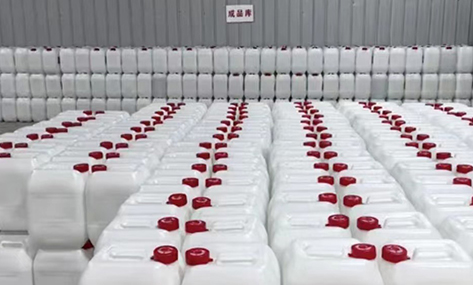
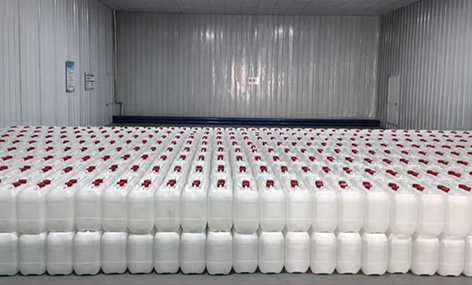
Common packs: 25–30 kg HDPE drums, 200 kg drums, 1000 L IBC totes. Store below 30°C, away from oxidizers and bases. Service life is around 24 months sealed. PPE: gloves, goggles, local exhaust—this isn’t the place to improvise.
Mini case studies (quick hits)
1) Beverage co. adjusted pH from 3.8 to 3.5 using a 25% solution of glacial acetic acid for sale; achieved consistent flavor brightness and extended microbial stability by ≈15%, verified by challenge tests. 2) Artisan pickler swapped table vinegar for a controlled-dose of glacial acetic acid for sale to stabilize batch-to-batch acidity; customer feedback mentioned “cleaner sourness” (their words, not mine). 3) Bakery partner combined glacial acetic acid for sale with calcium propionate; shelf life up two days in humid storage, mold counts down per ISO 21527.
What to ask suppliers (trust me, it helps)
- Current COA with GC assay, KF moisture, aldehydes, metals (ICP-MS).- Food safety certs: ISO 22000/FSSC 22000, HACCP, FCC conformity statement, REACH.
- Batch traceability and recall mock test results.
- Micro limits and permanganate time test (or equivalent oxidative impurities test).
- Custom pack options, tamper evidence, and nitrogen blanketing where applicable.
Standards and references: FCC monograph (Acetic Acid), Codex INS 260 (GSFA), EU additives framework for E260, and REACH registration help ground procurement decisions in something firmer than a price sheet.
Citations
- Food Chemicals Codex (FCC), Acetic Acid Monograph.
- Codex Alimentarius, General Standard for Food Additives (GSFA), INS 260.
- European Commission, Regulation (EC) No 1333/2008 on Food Additives (E260).
- PubChem, Acetic Acid Compound Summary (CID 176).
- European Chemicals Agency (ECHA), REACH Registration dossier for Acetic Acid.
-
Industrial Applications and Properties of 75 acetic acid Solution
NewsApr.16,2026
-
Properties and Industrial Applications of 64 19 7 acetic acid
NewsApr.09,2026
-
Comprehensive Guide to 56 Acetic Acid Applications and Reliable Sourcing
NewsApr.07,2026
-
Comprehensive Guide to 5 Glacial Acetic Acid for International Trade and Industrial Applications
NewsApr.04,2026
-
Exploring 100 Acetic Acid Properties Applications and Reliable Sourcing
NewsMar.31,2026
-
Comprehensive Guide to 10 Glacial Acetic Acid Properties and Applications
NewsMar.28,2026
 English
  Belarusian
  Dutch
Dutch  French
  German
  Hindi
Hindi  Indonesian
  Japanese
  Korean
  Lao
Lao  Malay
Malay  Mongolian
  Myanmar
  Polish
  Portuguese
  Russian
  Spanish
  Tagalog
  Thai
Thai  Vietnamese