

Jan . 28, 2026 11:05 Back to list
The Critical Role of Glacial Acetic Acid in TAE Buffer for Molecular Biology
The Crucial Role of Glacial Acetic Acid in TAE Buffer
In molecular biology, particularly in gel electrophoresis, the Tris-Acetate-EDTA (TAE) buffer is a cornerstone. A vital component of this buffer is glacial acetic acid, which plays a critical role in maintaining pH, conductivity, and overall buffer performance. Understanding the function of glacial acetic acid is paramount for achieving accurate and reliable results in DNA and RNA separation. This article will delve into the specifics of this role, exploring its impact on electrophoresis and its importance for optimal experimental outcomes. We will cover why high-purity glacial acetic acid, such as that offered by YSXL, is essential for consistently reliable results.
Understanding TAE Buffer Composition and pH Control
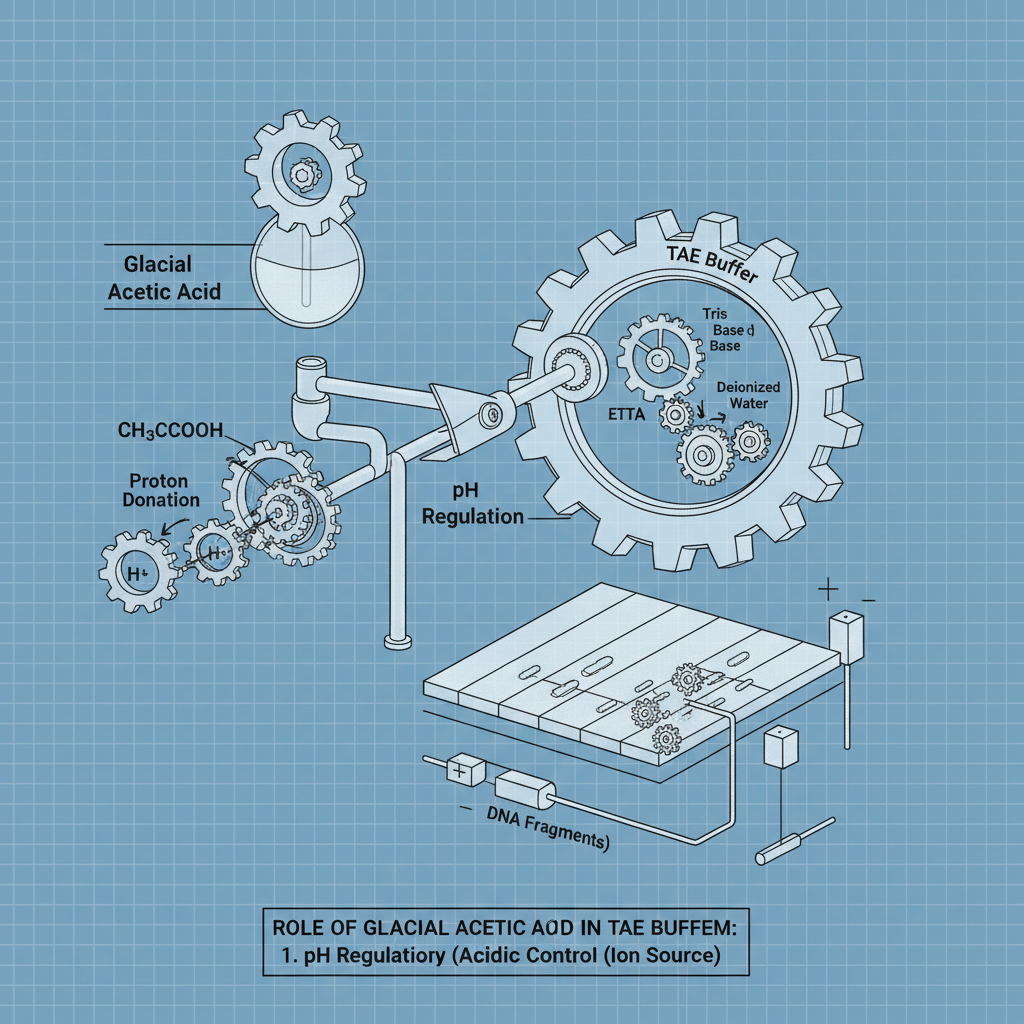
TAE buffer is a widely used solution in molecular biology, specifically for gel electrophoresis of DNA and RNA. It’s comprised of Tris base, acetic acid, and EDTA. The purpose of the Tris base is to maintain a stable pH, while EDTA chelates divalent cations like Mg2+, which are required by DNases and RNases. Crucially, the acetic acid component is responsible for setting and maintaining the optimal pH range of the buffer, typically between 8.0 and 8.3. Glacial acetic acid, being highly concentrated (99+%), provides a precise means to achieve this pH. Any deviation from this ideal range can affect DNA migration, band resolution and even lead to DNA degradation.
Key Point: Precise pH control is absolutely critical for successful DNA/RNA electrophoresis. Glacial acetic acid is the primary agent for achieving and maintaining this control within TAE buffer.
The Role of Glacial Acetic Acid in Conductivity
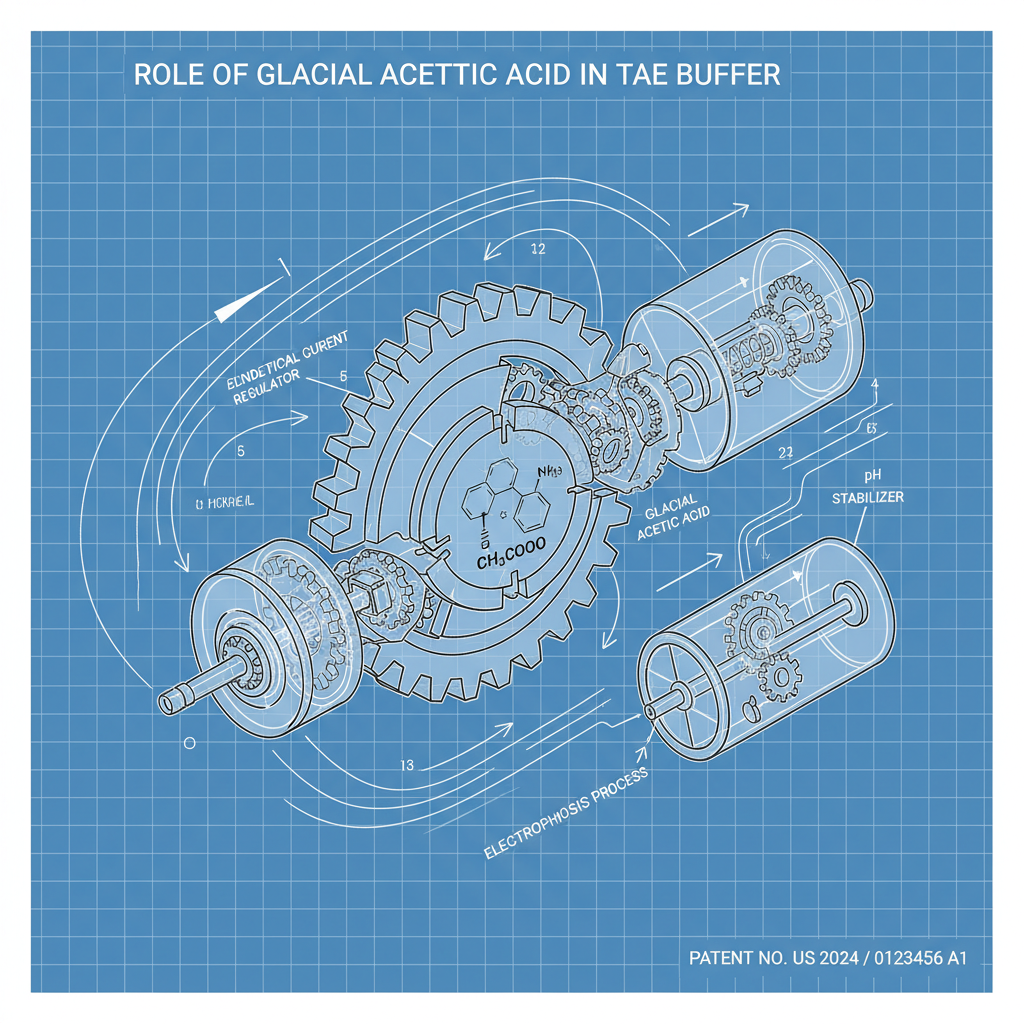
Beyond pH regulation, glacial acetic acid significantly influences the buffer's conductivity. Conductivity is essential as it allows the electric field to efficiently drive the negatively charged DNA or RNA molecules through the gel matrix. The acetate ions (CH3COO-) derived from acetic acid contribute to this conductivity. Higher conductivity enables faster electrophoresis times, but excessive conductivity can generate heat, potentially distorting the bands. Therefore, using the correct concentration of glacial acetic acid is vital to balance speed and quality.
Impact of Conductivity on Electrophoresis:
• Faster migration rates
• Reduced electrophoresis time
• Potential for increased heat generation
• Optimal conductivity ensures sharp band resolution.
Impact of Acetic Acid Purity on Electrophoresis Results
The purity of the glacial acetic acid used is paramount. Impurities can interfere with DNA migration, introduce unwanted bands, or even degrade the nucleic acids. High-quality glacial acetic acid, like that produced by YSXL, is rigorously purified to minimize contaminants. Contaminants like heavy metals or other organic compounds can alter the buffer’s ionic strength and pH, leading to unreliable results. Using a consistent, high-purity source ensures reproducibility and confidence in your experimental data.
Glacial Acetic Acid Concentration and TAE Buffer Preparation
Proper preparation of TAE buffer requires precise calculation and measurement of glacial acetic acid. Typical TAE buffer formulations utilize around 0.05M acetic acid. It’s important to use volumetric flasks and calibrated pipettes to ensure accuracy. Incorrect concentrations can lead to suboptimal electrophoresis conditions. YSXL provides glacial acetic acid with guaranteed purity and consistent concentration, simplifying buffer preparation and ensuring reliable results.
YSXL Glacial Acetic Acid: Your Trusted Source for Reliable Results
For consistent and reliable results in molecular biology applications, choosing a high-quality supplier of glacial acetic acid is essential. YSXL specializes in the production of high-purity glacial acetic acid, meeting the stringent requirements of research laboratories and diagnostic facilities worldwide. Our commitment to quality control and consistent product specifications guarantees optimal performance in your TAE buffer preparations. Contact us today to learn more about our products and services.
Conclusion: Ensuring Accurate Electrophoresis with Quality Glacial Acetic Acid
The role of glacial acetic acid in TAE buffer is foundational to successful DNA and RNA electrophoresis. From pH control to conductivity, its impact on experimental outcomes is significant. By utilizing high-purity glacial acetic acid from a trusted supplier like YSXL, researchers can ensure accurate, reproducible, and reliable results in their molecular biology experiments.
Frequently Asked Questions (FAQs)
What happens if the pH of TAE buffer is too high?
If the pH of TAE buffer is too high (above 8.3), DNA migration can be affected, leading to distorted bands or altered migration patterns. High pH can also potentially cause DNA degradation over time. Maintaining the correct pH is crucial for accurate size separation. This highlights the importance of precise glacial acetic acid addition and verification using a calibrated pH meter. Using consistently high-quality glacial acetic acid, like that from YSXL, minimizes the risk of pH fluctuations.
Can I substitute another acid for glacial acetic acid in TAE buffer?
While other acids could technically be used, glacial acetic acid is specifically chosen for its buffering capacity and compatibility with DNA and RNA. Substituting another acid may alter the buffer’s ionic strength, pH stability, and potentially introduce interfering ions, leading to inaccurate results. It's strongly recommended to adhere to the established TAE buffer formulation utilizing glacial acetic acid for reliable electrophoresis.
How should I store glacial acetic acid?
Glacial acetic acid is hygroscopic, meaning it readily absorbs moisture from the air. Therefore, it should be stored in a tightly sealed container in a cool, dry place. Avoid exposure to direct sunlight. Proper storage prevents dilution and maintains its concentration, ensuring accurate buffer preparation. YSXL ships its glacial acetic acid in containers designed to minimize moisture absorption.
What is the difference between glacial acetic acid and diluted acetic acid?
Glacial acetic acid is nearly pure acetic acid (typically 99.7-99.8%), containing very little water. Diluted acetic acid refers to solutions of acetic acid in water, with varying concentrations. Glacial acetic acid is used for precise buffer preparation where a known and concentrated source of acetic acid is required. Diluted solutions are often used for other applications, such as pH adjustments or sample preparation, where a specific concentration is needed.
-
Industrial Applications and Properties of 75 acetic acid Solution
NewsApr.16,2026
-
Properties and Industrial Applications of 64 19 7 acetic acid
NewsApr.09,2026
-
Comprehensive Guide to 56 Acetic Acid Applications and Reliable Sourcing
NewsApr.07,2026
-
Comprehensive Guide to 5 Glacial Acetic Acid for International Trade and Industrial Applications
NewsApr.04,2026
-
Exploring 100 Acetic Acid Properties Applications and Reliable Sourcing
NewsMar.31,2026
-
Comprehensive Guide to 10 Glacial Acetic Acid Properties and Applications
NewsMar.28,2026
 English
  Belarusian
  Dutch
Dutch  French
  German
  Hindi
Hindi  Indonesian
  Japanese
  Korean
  Lao
Lao  Malay
Malay  Mongolian
  Myanmar
  Polish
  Portuguese
  Russian
  Spanish
  Tagalog
  Thai
Thai  Vietnamese