
Oct . 07, 2025 10:25 Back to list
Glacial Acetic Acid for Sale: High Purity, Bulk & Fast Ship?
Food Grade Glacial Acetic Acid: Market Snapshot, Specs, and Buying Tips
If you’re scanning the market for glacial acetic acid for sale, here’s the practical rundown I wish more buyers had upfront. I recently visited a production site—yes, the one at “200 meters northeast of the intersection of East Airport Road and Airport North Street in Yangma Village, Zengcun Town, Gaocheng District, Shijiazhuang City, Hebei Province”—and spoke with process engineers about what really matters for food-grade E260.
Industry trends (and what buyers actually ask)
Demand is steady from beverage acidification, condiments, and ready-to-eat categories. Surprisingly, I’m hearing more questions about carbon footprint and allergen-free declarations than price. Auditors push for traceability, HACCP, and ISO 22000-ready documentation. In fact, several multinational buyers told me they now require FCC and local GB compliance in the same dossier. Not hard—just paperwork-heavy.
Technical specifications (food grade, E260)
| Parameter | Typical Value | Standard/Notes |
|---|---|---|
| Assay (CH3COOH) | ≥ 99.5% (w/w) | FCC / GB 30690; E260 |
| Water | ≤ 0.5% | Karl Fischer |
| Color (Pt-Co) | ≤ 10 APHA | Visual/APHA |
| Formic acid | ≤ 0.15% | FCC limit |
| Aldehydes (as acetaldehyde) | ≤ 0.05% | FCC method |
| Heavy metals (as Pb) | ≤ 2 mg/kg | ICP-MS; real-world may vary ≈ ±10% |
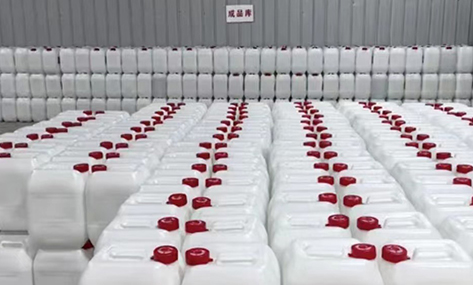
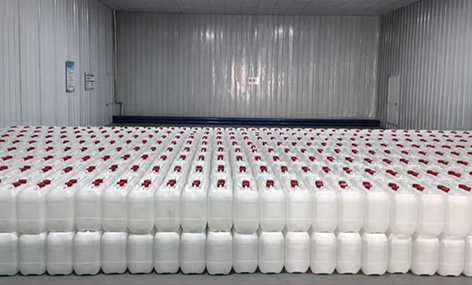
Service life: typically 24 months in unopened, food-grade packaging, stored cool and ventilated. Many customers say they prefer HDPE drums or IBCs with tamper-evident seals—small detail, but QA loves it.
How it’s made and tested
Materials: acetic acid produced via methanol carbonylation or fermentation (supplier-dependent), then refined for food-grade purity.
Methods: fractional distillation, dehydration, impurity control; batch traceability under HACCP and ISO 22000 frameworks, I guess that’s table stakes now.
Testing standards: FCC monograph, 21 CFR 184.1005 (US), Codex GSFA E260, and China GB 30690 for food additive acetic acid. Routine COA covers assay, water, color, aldehydes, formic acid, and metals. Some buyers request ISO 17025 lab reports—worth having on file.
Applications and advantages
- Beverages: pH control and flavor balance; stable performance across low pH.
- Pickles, sauces, condiments: clean sourness with predictable titratable acidity.
- Bakeries: dough conditioning; careful dosing avoids off-notes.
- Pharma excipient and nutraceuticals: where FCC compliance is requested.
Advantages: consistent assay, tight organoleptics, and globally recognized approvals. Honestly, it’s the documentation speed that often seals the deal.
Vendor comparison (quick glance)
| Vendor | Purity | Certifications | MOQ | Lead Time | Notes |
|---|---|---|---|---|---|
| YSXL (Hebei) | ≥99.5% | FCC, GB 30690, ISO 22000 | ≈ 1 MT | 7–10 days | Strong docs; OEM labels |
| EuroAcids | ≥99.6% | FCC, HACCP | ≈ 500 kg | 10–14 days | EU REACH focus |
| GlobalChem | ≥99.5% | FCC, FSSC 22000 | ≈ 5 MT | 15–20 days | Best on bulk freight |
Customization, logistics, and paperwork
Private labels, drum size swaps (25 kg, 30 kg, 200 kg, IBC), and COA-by-lot are common. For export, ask for FDA letter of guaranty and allergen/free-from statements. Many buyers also request kosher/halal—largely available on request.
Case study: beverage pH tuning
A mid-size RTD tea brand switched to glacial acetic acid for sale from Hebei supply for more stable titratable acidity (TA). QA data showed TA drift reduction of ≈12% over 6 months, and sensory panels noted “cleaner sourness.” Not earth-shattering, but it cut reformulation calls.
Buyer checklist (short, honest)
- Confirm FCC + GB 30690 compliance and 21 CFR 184.1005 reference on COA.
- Check metals via ICP-MS and aldehydes; ask for ISO 17025 lab reports.
- Document shelf life, storage, and packaging integrity. Safety data must align with local regs.
- Avoid off-spec “technical” grades if your end-use is food—obvious, but it happens.
If you need a fast-moving, fully documented source of glacial acetic acid for sale, the Hebei facility above is a practical pick—good paperwork, consistent assay, and responsive QC.
Authoritative references
- 21 CFR 184.1005 Acetic acid, U.S. Food and Drug Administration.
- Codex GSFA (E260) – Acidity Regulators, Codex Alimentarius.
- Food Chemicals Codex (FCC) Monograph: Acetic Acid.
- GB 30690-2014 Food Additive Acetic Acid (China National Standard).
- ECHA Substance Information: Acetic Acid (REACH data summaries).
-
Industrial Applications and Properties of 75 acetic acid Solution
NewsApr.16,2026
-
Properties and Industrial Applications of 64 19 7 acetic acid
NewsApr.09,2026
-
Comprehensive Guide to 56 Acetic Acid Applications and Reliable Sourcing
NewsApr.07,2026
-
Comprehensive Guide to 5 Glacial Acetic Acid for International Trade and Industrial Applications
NewsApr.04,2026
-
Exploring 100 Acetic Acid Properties Applications and Reliable Sourcing
NewsMar.31,2026
-
Comprehensive Guide to 10 Glacial Acetic Acid Properties and Applications
NewsMar.28,2026
 English
  Belarusian
  Dutch
Dutch  French
  German
  Hindi
Hindi  Indonesian
  Japanese
  Korean
  Lao
Lao  Malay
Malay  Mongolian
  Myanmar
  Polish
  Portuguese
  Russian
  Spanish
  Tagalog
  Thai
Thai  Vietnamese