
Oct . 12, 2025 12:25 Back to list
Glacial Acetic Acid for Sale - High Purity, Bulk Deals
Food Grade Glacial Acetic Acid: What Buyers Are Asking in 2025
If you’re scouting glacial acetic acid for sale right now, you’re not alone. Demand is quietly climbing across beverages, pickles, and sauce processing, while procurement teams keep one eye on assay specs and the other on logistics. I’ve toured plenty of plants, and—honestly—little decisions like aldehyde caps or drum liners can make or break a QA audit.
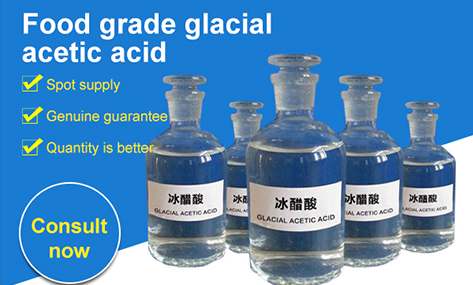
Industry snapshot
Two trends dominate: cleaner carbonylation routes (lower trace impurities, better color) and documented food safety systems. Buyers are asking for FCC-compliant lots, HACCP or FSSC 22000-backed production, and tighter ICP-MS heavy metal reports. Prices? Still influenced by methanol and CO feedstocks—but I’m seeing more suppliers touting “green methanol” stories, which, to be fair, are promising but still ramping.
Origin and product notes
Product: Food grade glacial acetic acid (E260) • Origin: 200 meters northeast of the intersection of East Airport Road and Airport North Street in Yangma Village, Zengcun Town, Gaocheng District, Shijiazhuang City, Hebei Province. Recognized acidity regulator with the characteristic vinegar bite—yet for food manufacturing, purity and consistency matter far more than aroma.
Typical specifications (food grade)
| Assay (CH3COOH) | ≥ 99.8% (w/w) |
| Water (Karl Fischer) | ≤ 0.15% |
| Color (APHA) | ≤ 10 |
| Permanganate time | ≥ 30 min |
| Aldehydes (as acetaldehyde) | ≤ 50 mg/kg |
| Formic acid | ≤ 50 mg/kg |
| Heavy metals (as Pb) | ≤ 1–2 mg/kg |
| Iron (Fe) | ≤ 1 mg/kg |
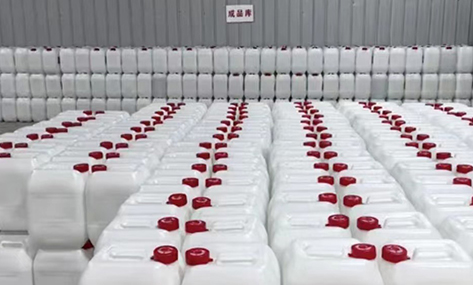
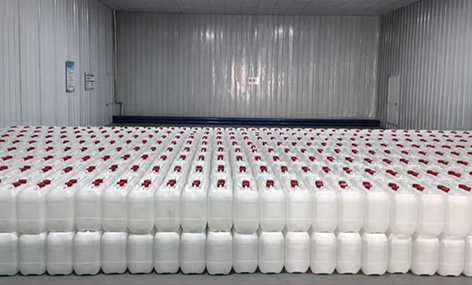
| Packaging | HDPE drums 25–30 kg, 220 kg; IBC ≈ 1,050–1,100 kg; bulk tanker |
| Shelf life | 24 months (sealed, cool, ventilated storage; real-world may vary) |
How it’s made and verified
Process flow (typical): methanol + CO → catalytic carbonylation → multi-stage distillation → dehydration to “glacial” grade → polishing (activated carbon/finishing) → food-grade filling. QC methods usually include GC for volatile impurities, titrimetric assay, APHA color, KF water, and ICP-MS for metals. Compliance targets: FCC monograph, 21 CFR affirmation, and EU E-number E260. To be honest, the extra attention on aldehydes has paid off in beverage clarity.
Where it’s used
- Beverages and RTD teas: pH fine-tuning without flavor drift.
- Pickles, sauces, condiments: stable sourness; predictable titratable acidity.
- Bakery and dairy: dough conditioning, mozzarella acidification (careful dosing).
- Cleaning-in-place (food plant): controlled descaling when specs allow.
Vendor comparison (indicative)
| Vendor | Certs | Assay | Packaging | Lead time | Customization |
|---|---|---|---|---|---|
| YSXL (Hebei) | ISO 9001, HACCP/FSSC (claimed), REACH prereg. | ≥99.8% | 25/220 kg drums, IBC, bulk | 7–15 days | Aldehyde-lower, private label |
| EU Import Brand | FCC, FSSC 22000 | ≥99.8% | 220 kg drums, IBC | Stock/fast | Docs bundle heavy |
| Local Distributor | COA + SDS | ≥99.5–99.8% | Mixed | Same-week | Limited |
Customization, QA, and real-world feedback
Options include lower-odor profiles, spec-tighter aldehyde limits, palletization per retailer rules, tamper-evident drum seals, and dual-language labels. Many customers say the switch to IBCs cut handling time; a sauce plant told me their titratable acidity drift dropped after moving to a stricter aldehyde cap. Service teams now share ICP-MS trend charts—surprisingly useful for auditors.
Mini case notes
- Beverage plant (ASEAN): dropped color to ≤5 APHA lots; clarified tea stayed brighter through 120-day shelf tests.
- Pickling line (EU): standardized to 220 kg drums; waste reduction ≈ 6% via better dosing SOPs.
- Dairy co-op: dual sourcing for resilience; both suppliers audited to FCC + HACCP—zero NCRs last two audits.
If you’re comparing glacial acetic acid for sale offers, ask for: FCC compliance, 21 CFR status letter, recent ICP-MS heavy metals, APHA color data, aldehyde spec, and shelf-life/storage guidance. It seems basic, but it speeds approvals.
Standards, safety, and documents
Target standards: Food Chemicals Codex (Acetic Acid), EU E260 under Reg. (EC) 1333/2008, US 21 CFR §184.1005. Labs ideally ISO/IEC 17025 accredited. Plant certifications like ISO 9001 and FSSC 22000/HACCP are common. Always review SDS, local transport rules, and food-contact packaging assurances.
References
- Food Chemicals Codex (FCC), Acetic Acid Monograph. https://www.foodchemicalscodex.org/
- 21 CFR §184.1005 – Acetic acid. https://www.ecfr.gov/
- Regulation (EC) No 1333/2008 on food additives (E260). https://eur-lex.europa.eu/
- ISO/IEC 17025 – Testing and calibration laboratories. https://www.iso.org/
Note: Data shown are typical; actual lot values and regulations for glacial acetic acid for sale may vary by region and application. Always confirm with a current COA.
-
Industrial Applications and Properties of 75 acetic acid Solution
NewsApr.16,2026
-
Properties and Industrial Applications of 64 19 7 acetic acid
NewsApr.09,2026
-
Comprehensive Guide to 56 Acetic Acid Applications and Reliable Sourcing
NewsApr.07,2026
-
Comprehensive Guide to 5 Glacial Acetic Acid for International Trade and Industrial Applications
NewsApr.04,2026
-
Exploring 100 Acetic Acid Properties Applications and Reliable Sourcing
NewsMar.31,2026
-
Comprehensive Guide to 10 Glacial Acetic Acid Properties and Applications
NewsMar.28,2026
 English
  Belarusian
  Dutch
Dutch  French
  German
  Hindi
Hindi  Indonesian
  Japanese
  Korean
  Lao
Lao  Malay
Malay  Mongolian
  Myanmar
  Polish
  Portuguese
  Russian
  Spanish
  Tagalog
  Thai
Thai  Vietnamese