
Oct . 28, 2025 14:30 Back to list
Glacial Acetic Acid for Sale – 99.8% Purity, NFPA, Fast Ship
Food Grade Glacial Acetic Acid: What Buyers Need to Know Right Now
If you’re scanning the market for Glacial Acetic Acid For Sale, here’s the straight talk from someone who has spent too many mornings in blending rooms and too many afternoons auditing suppliers. Demand for food-grade E260 has stayed resilient—beverages, condiments, and fermentation plants just don’t stop. This specific product is made in Yangma Village, Zengcun Town, Gaocheng District, Shijiazhuang City, Hebei Province (about 200 meters northeast of East Airport Road and Airport North Street)—a hub that’s surprisingly efficient on logistics.
What it is and why it matters
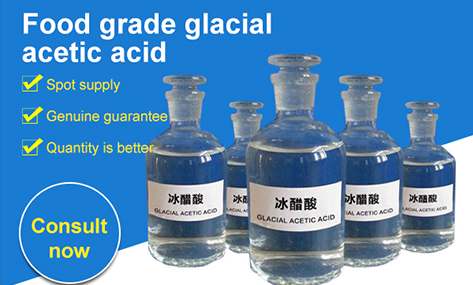
Acetic acid—yep, the sharp bite you know from vinegar—is a classic organic acid and a workhorse acidity regulator (E260). In food manufacturing, you’ll see it shaping pH, stabilizing flavor profiles, and nudging microbial safety. Honestly, many customers say they choose it because it’s predictable and easy to validate in QC.
Typical specs (food grade)
| Parameter | Spec (≈) | Method / Standard |
|---|---|---|
| Assay (CH3COOH) | ≥ 99.8% w/w | FCC / GC |
| Water | ≤ 0.20% | Karl Fischer |
| Color (APHA) | ≤ 10 | Pt–Co |
| Formic acid | ≤ 0.15% | GC |
| Heavy metals (as Pb) | ≤ 1 mg/kg | ICP-MS (FCC) |
| Aldehydes | ≤ 0.05% | Titrimetric |
Note: Real-world use may vary by recipe, regional regulation, and validation protocol.
Process flow and QC snapshot
- Materials: synthetic acetic acid from methanol carbonylation, food-grade stabilizers if required.
- Purification: fractional distillation to glacial grade, polishing filtration.
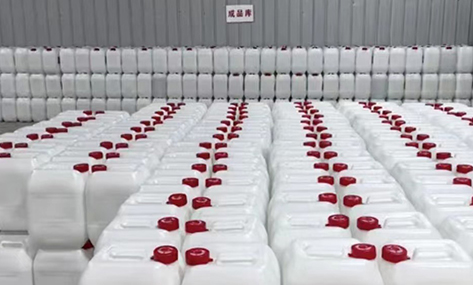
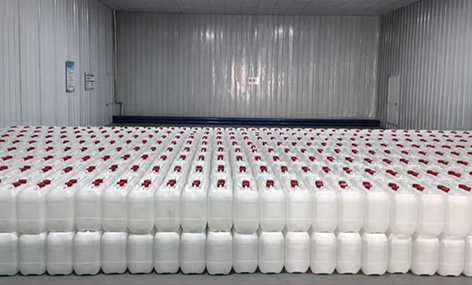
- Filling: HDPE drums (25 kg, 200 kg) or IBCs (≈1,050 kg), SS316 lines to minimize ions.
- Testing: GC purity, KF moisture, APHA color, ICP-MS for metals, microbial screen (as per FCC).
- Standards: FCC, EU E260, Codex GSFA; supplier QA typically ISO 9001, food-safety system like FSSC 22000 or HACCP.
- Service life: around 24 months sealed, cool/dry; keep away from bases and oxidizers.
Applications and advantages
Use cases span beverage acidification, pickling brines, condiments, bakery dough pH tuning, and fermentation pH control. Advantages? Stable cost compared to some organic acids, clean label recognition (E260), and strong pH leverage. Many formulators note fast titration response and reproducible sensory outcomes—though, to be honest, dose discipline is everything.
Vendor comparison (quick buyer’s view)
| Vendor | Certs | Lead Time | MOQ | Traceability | Packaging |
|---|---|---|---|---|---|
| YSXL (Hebei) | ISO 9001, HACCP (claimed) | 7–14 days | 1×IBC | Batch COA + GC/KF data | 25 kg, 200 kg, IBC |
| Trader A (EU) | FSSC 22000 (warehouse) | 10–21 days | 200 kg | COA, limited upstream | 200 kg, IBC |
| Importer B (US) | GFSI storage | Stock-dependent | 25 kg | COA only | 25 kg drums |
Pricing varies with methanol and CO price indexes; sample COAs are your friend—ask for APHA and ICP-MS snapshots.
Customization and logistics
- Strengths: 99.8% glacial; on request, pre-dilutions (e.g., 10–20% food vinegar bases).
- Packaging: tamper-evident drums/IBCs, nitrogen blanket optional.
- Labeling: E260, lot, manufacturing date, QR-linked COA.
- Safety: ventilated storage, corrosion-aware pallets, food-contact hoses.
Mini case files and feedback
Case A (beverage, ASEAN): switching to Glacial Acetic Acid For Sale from this Hebei line cut their APHA color variability by ≈30% month-on-month; pH drift reduced from 0.08 to 0.03 units (n=18 batches). Case B (pickle factory, EU): sensory panel reported “cleaner sourness” at 0.6% dose; micro counts remained within spec at D+30. A buyer summed it up: “Not flashy, just consistent,” which—honestly—is what you want from E260.
What to check before you buy
- COA alignment to FCC/EU E260 and heavy metals limits.
- Recent GC/KF results and APHA color photo if available.
- Shelf-life statement (aim for 24 months) and storage SOPs.
- Food-safety certification scope (plant vs. warehouse).
For stable pipelines, I guess the winning combo is predictable purity, transparent QC, and responsive lead times. That’s where Glacial Acetic Acid For Sale from this origin seems to punch above its weight.
Authoritative citations
- Food Chemicals Codex (FCC) Monograph: Acetic Acid, USP—FCC Online.
- EU Regulation (EC) No 1333/2008 on Food Additives—E260 entry, European Commission Database.
- Codex Alimentarius, General Standard for Food Additives (GSFA): Acetic Acid listings.
-
Industrial Applications and Properties of 75 acetic acid Solution
NewsApr.16,2026
-
Properties and Industrial Applications of 64 19 7 acetic acid
NewsApr.09,2026
-
Comprehensive Guide to 56 Acetic Acid Applications and Reliable Sourcing
NewsApr.07,2026
-
Comprehensive Guide to 5 Glacial Acetic Acid for International Trade and Industrial Applications
NewsApr.04,2026
-
Exploring 100 Acetic Acid Properties Applications and Reliable Sourcing
NewsMar.31,2026
-
Comprehensive Guide to 10 Glacial Acetic Acid Properties and Applications
NewsMar.28,2026
 English
  Belarusian
  Dutch
Dutch  French
  German
  Hindi
Hindi  Indonesian
  Japanese
  Korean
  Lao
Lao  Malay
Malay  Mongolian
  Myanmar
  Polish
  Portuguese
  Russian
  Spanish
  Tagalog
  Thai
Thai  Vietnamese