
Oct . 02, 2025 14:20 Back to list
Glacial Acetic Acid for Sale: 99.8% Pure, Bulk, Quick Ship?
If you’re sourcing acetic acid for food processing or beverage lines, here’s the one buyers keep asking me about: glacial acetic acid for sale. I’ve toured plants, talked to QA teams, and—honestly—smelled more drums than I’d like to admit. Food grade matters, and so does consistency batch to batch.
Industry snapshot? Demand is steady-to-rising thanks to pH control in RTD beverages, pickled products, and fermentation management. E-number regulations (E260) remain stable, but documentation and traceability are getting tighter. Many customers say they prefer suppliers who can align with FCC specs and offer ISO 22000 or FSSC 22000 food-safety systems. Makes sense.
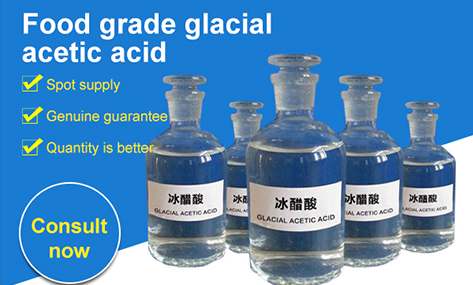
Product at a glance: Food grade glacial acetic acid
Acetic acid (CAS 64-19-7) is a typical short-chain fatty acid and the sharp backbone of vinegar’s aroma. In food use, think acidity regulation, flavor enhancement, and microbial control—within legal dose limits, of course. This producer originates from: 200 meters northeast of the intersection of East Airport Road and Airport North Street in Yangma Village, Zengcun Town, Gaocheng District, Shijiazhuang City, Hebei Province.
| Parameter | Spec (Food Grade) | Method/Reference |
|---|---|---|
| Purity (CH3COOH) | ≥ 99.8% w/w (≈) | FCC; GB/T 1628; GC |
| Water | ≤ 0.15% (typ. 0.05–0.12%) | ISO 760 (Karl Fischer) |
| Color (Pt–Co) | ≤ 10 APHA | ASTM D1209 |
| Formic acid | ≤ 0.05% | Titration/GC |
| Aldehydes (as acetaldehyde) | ≤ 0.05 g/kg | FCC |
| Heavy metals (as Pb) | ≤ 1 mg/kg | FCC/ICP-MS |
| Non-volatile residue | ≤ 5 mg/kg | FCC |
| Shelf life | ≈ 24 months, sealed | Label claim |
Batch QC snapshot (example): Purity 99.86% (GC); Water 0.08% (KF); Color 5 APHA. Real-world use may vary by formulation and local regulations.
How it’s made (brief)
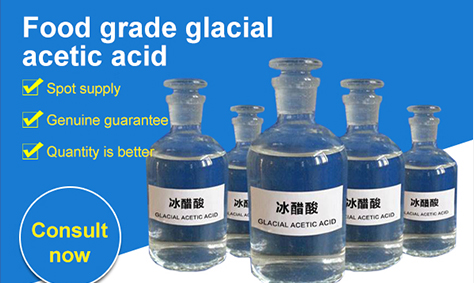
Typical route is low-water carbonylation of methanol (Monsanto/Cativa lineage), then multi-stage distillation, dehydration, and food-grade polishing. No corrosion inhibitors added for food use. Testing aligns with FCC/E260 acceptance, sometimes dual-listed with EU and Chinese standards. Packaging: 25 kg or 200 kg HDPE drums, 1,000 L IBCs. Store cool, sealed, away from alkalis and oxidizers.
Applications, advantages, and notes
- pH control in beverages, sauces, condiments; pickling brines; bakery dough conditioning.
- Fermentation pH trim; CIP descaling (food plants) when validated by QA.
- Advantages: high purity, predictable titratable acidity, broad regulatory recognition (E260/FCC).
Case-in-point: a mid-size beverage facility cut CIP cycle time by ~12% after switching to tighter-spec acetic acid—less foaming, steadier pH endpoints. To be honest, not every plant will see that exact uplift, but it’s a common refrain.
Vendor comparison (what buyers ask me)
| Vendor | Strengths | Docs/Certs | MOQ | Lead time |
|---|---|---|---|---|
| Yongsheng Xieli (Hebei) | Tight food-grade specs; stable supply | COA, MSDS, ISO 22000/HACCP (on request) | 200 kg | 7–15 days (≈) |
| EU Trader A | EU warehouse; REACH familiarity | COA, REACH, EU 1333/2008 alignment | 1 pallet | 2–3 weeks |
| SEA Distributor B | Regional stock, flexible shipments | COA, Halal/Kosher (case-by-case) | Varies | 1–2 weeks |
Customization: drum/IBC labeling, tighter moisture targets, micro limits (if co-packed), and regional docs. QA teams often request migration to glacial acetic acid for sale formats that match line SOPs—totally doable with a decent planning window.
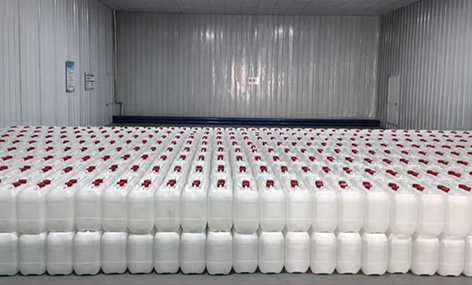
Compliance and safety: follow local food additive rules (E260), consult GB 2760 in China, FCC in the U.S., and your internal HACCP. Use PPE; it’s corrosive in concentrate. For end-product claims, your label owner is responsible—standard industry practice. And yes, buyers still search for glacial acetic acid for sale by purity first, but documentation wins the audit.
Citations
- FCC (Food Chemicals Codex), Monograph: Acetic Acid.
- EU Regulation (EC) No 1333/2008 on food additives; E-number E260.
- GB/T 1628 Acetic Acid—Specifications and test methods (China).
- GB 2760 Standard for the Use of Food Additives (China).
- JECFA Evaluations—Acetic Acid; FAO/WHO Compendium.
-
Industrial Applications and Properties of 75 acetic acid Solution
NewsApr.16,2026
-
Properties and Industrial Applications of 64 19 7 acetic acid
NewsApr.09,2026
-
Comprehensive Guide to 56 Acetic Acid Applications and Reliable Sourcing
NewsApr.07,2026
-
Comprehensive Guide to 5 Glacial Acetic Acid for International Trade and Industrial Applications
NewsApr.04,2026
-
Exploring 100 Acetic Acid Properties Applications and Reliable Sourcing
NewsMar.31,2026
-
Comprehensive Guide to 10 Glacial Acetic Acid Properties and Applications
NewsMar.28,2026
 English
  Belarusian
  Dutch
Dutch  French
  German
  Hindi
Hindi  Indonesian
  Japanese
  Korean
  Lao
Lao  Malay
Malay  Mongolian
  Myanmar
  Polish
  Portuguese
  Russian
  Spanish
  Tagalog
  Thai
Thai  Vietnamese