The global supply chain for high-purity chemical reagents is currently undergoing a significant shift toward stricter purity standards, particularly within the food additive and pharmaceutical sectors. As regulatory bodies tighten constraints on contaminants, the role of professional glacial acetic acid manufacturers has become critical in ensuring that industrial-grade precursors are refined into food-safe reagents without compromising chemical stability.
This transition is driven by the increasing demand for precise pH control and antimicrobial properties in processed foods. The challenge for the industry lies in maintaining the anhydrous nature of glacial acetic acid while eliminating trace metallic impurities that can catalyze unwanted oxidation in food products. For procurement managers, the focus has shifted from mere volume availability to the rigorous verification of batch-to-batch consistency and purity certifications.
This analysis examines the technical benchmarks used to evaluate chemical manufacturers, the engineering constraints of producing food-grade acetic acid, and the selection frameworks necessary for B2B buyers. By understanding these parameters, companies can better align their raw material sourcing with global safety standards and operational efficiency.


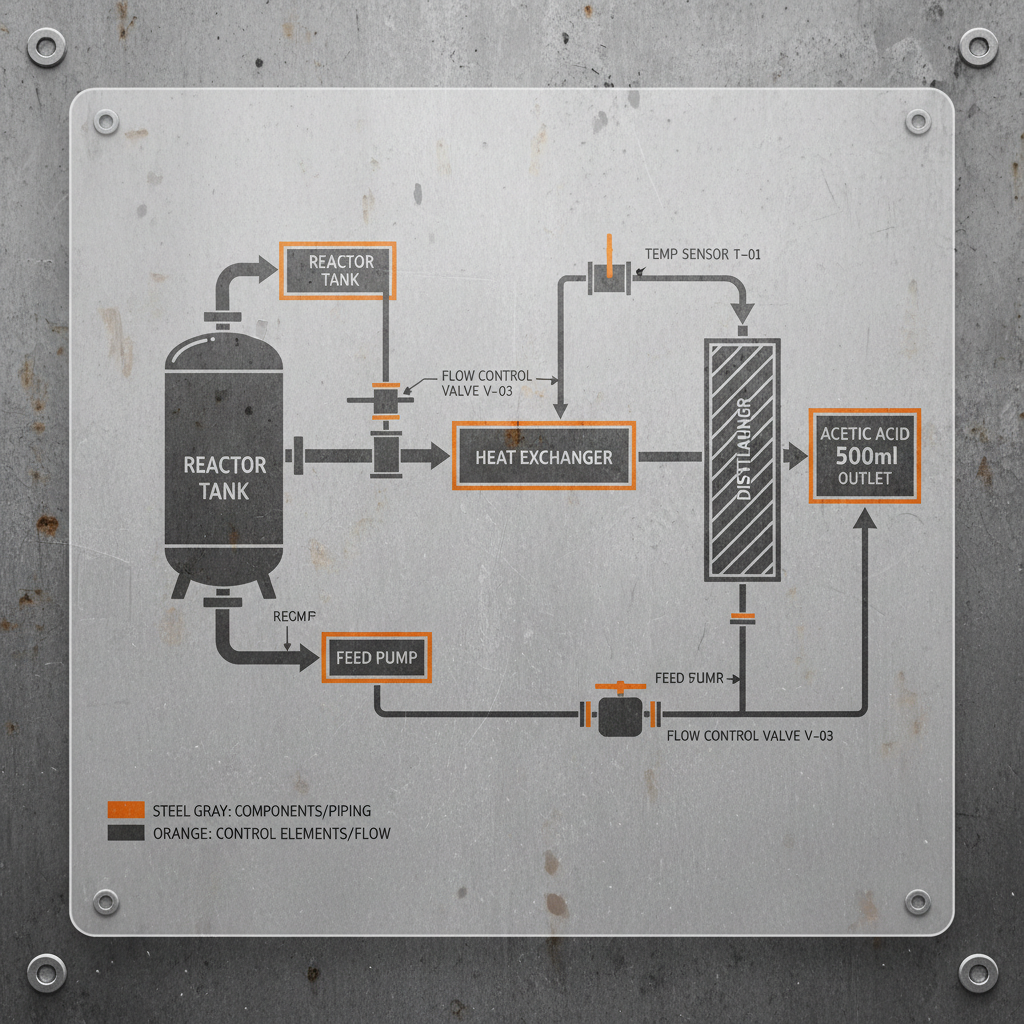
The production of glacial acetic acid involves the carbonylation of methanol or the oxidation of acetaldehyde. For high-purity applications, the distillation process must be meticulously controlled to remove water and other volatile organic compounds (VOCs), ensuring the product remains "glacial" (freezing just below 16.6°C).
The technical integrity of the output depends heavily on the materials used in the distillation columns. Corrosion-resistant alloys are required to prevent heavy metal leaching, which is a primary concern for food-grade certifications.
When evaluating the output of various glacial acetic acid manufacturers, the assay percentage is the primary benchmark. Food-grade acetic acid typically requires a purity level exceeding 99.8%. Any deviation in this percentage can affect the acidity levels in the final food product, potentially altering flavor profiles or compromising preservative efficacy.
Beyond purity, the color index (typically measured via APHA) indicates the presence of trace impurities. A clear, colorless liquid is essential; any yellowing suggests the presence of oxidation products or metallic contamination. This is particularly critical for products where the visual clarity of the final consumer good is a quality indicator.
Moreover, the control of residual catalysts, such as rhodium or iridium used in the Cativa or Monsanto processes, is mandatory. Engineering teams must implement strict filtration and purification stages to ensure these catalysts are completely removed, as they are not permitted in food-contact substances.
Maintaining the anhydrous state of glacial acetic acid is a constant engineering struggle. Because the substance is highly hygroscopic, it readily absorbs moisture from the atmosphere, which lowers its concentration and changes its physical properties.
Furthermore, temperature fluctuations during transit can lead to crystallization. This requires specialized logistics planning to ensure the product is stored and transported at temperatures that prevent the "glacial" effect from occurring prematurely, which would complicate the unloading process at the factory.
To objectively compare different suppliers, engineering teams often use a normalized scoring system. This system evaluates purity, stability, contaminant levels, and certification compliance. Rather than looking at a single data point, a weighted average provides a clearer picture of a manufacturer's reliability.
The following assessment represents a typical engineering rating for different purity grades and their suitability across various industrial applications, focusing on the trade-off between cost and technical performance.
In actual food production, glacial acetic acid is rarely used in its pure form but is instead diluted to create vinegar or used as a pH regulator. The integration process requires precise dosing pumps and stainless steel piping (typically Grade 316L) to prevent corrosion. A typical deployment scenario involves a closed-loop system where the acid is metered into a mixing tank based on real-time pH sensor feedback.
For companies like Hebei Yishan Flavor Co., Ltd., which focuses on edible acetic acid, the emphasis is on the seamless transition from industrial production to food-safe application. This involves rigorous quality control checks at the point of discharge to ensure that no contaminants have been introduced during the transfer process.
The industry is currently moving toward more sustainable production methods. While methanol carbonylation is efficient, there is a growing demand for bio-based acetic acid produced through the fermentation of biomass. This shift is driven by the consumer trend toward "natural" labels in food ingredients.
Technically, bio-based production faces the challenge of achieving the same purity levels as synthetic routes. The fermentation broth contains a complex mixture of organic acids and proteins, requiring more advanced membrane filtration and fractional distillation to reach the 99.8% purity threshold.
Future engineering efforts are focusing on the development of high-efficiency catalysts that can operate at lower temperatures, reducing the energy footprint of the distillation process. This will likely lead to a more decentralized production model where acid is produced closer to the final food processing plants.
Selecting the right supplier requires a balance between cost, purity, and logistical reliability. Procurement teams should not rely solely on the Certificate of Analysis (CoA) but should conduct independent third-party testing on initial batches to verify the claims made by the manufacturer.
A robust selection framework involves evaluating the manufacturer's quality management system (QMS), their ability to provide consistent volumes during market volatility, and their adherence to international food safety standards.
The following table provides a comparative framework for evaluating different configuration profiles of supply contracts based on industrial needs.
| Configuration Type | Purity Threshold | Quality Control Level | Recommended Use Case |
|---|---|---|---|
| Basic Configuration | >99.0% | Standard Batch Testing | General Industrial Cleaning |
| Standard Configuration | >99.5% | Periodic Lab Audit | Technical Chemical Synthesis |
| Food-Grade Configuration | >99.8% | Strict FCC Compliance | Edible Acid Additives |
| Precision Configuration | >99.9% | Continuous Monitoring | Pharmaceutical Grade Precursors |
| High-Duty Configuration | >99.7% | Bulk Stability Testing | Large-Scale Textile Processing |
| Industry Baseline | 99.0% - 99.5% | Minimum Regulatory Req. | Low-Sensitivity Applications |
Glacial acetic acid is an anhydrous form of acetic acid that has a purity of approximately 99.8% or higher. The term "glacial" refers to its tendency to freeze into ice-like crystals at a temperature of 16.6°C (61.9°F). From an engineering perspective, this means the water content must be kept extremely low to maintain this freezing point and the associated chemical reactivity.
The primary difference lies in the permissible levels of trace contaminants. Industrial-grade acid may contain higher levels of heavy metals (like arsenic or lead) and residual catalysts. Food-grade acid must comply with FCC (Food Chemicals Codex) or similar standards, which mandate strict limits on impurities to ensure the product is safe for human consumption and does not alter the taste of the food.
Acetic acid is highly hygroscopic. If moisture enters the storage tank, the purity drops below the glacial threshold, which can lead to inconsistent pH readings in production. Furthermore, diluted acetic acid is more corrosive to certain grades of carbon steel than the anhydrous form, potentially increasing the risk of equipment failure and leakages in the production line.
For high-purity applications, 316L stainless steel is the industry standard due to its resistance to organic acids. For seals and gaskets, PTFE (Teflon) is strongly recommended because it is chemically inert and does not degrade. Standard rubber or low-grade plastics should be avoided as they can leach phthalates or other chemicals into the acid.
Buyers should utilize titration methods to determine the exact acid concentration and use Gas Chromatography (GC) to identify volatile impurities. Additionally, a visual check for clarity (using a colorimeter) and a test for heavy metals via ICP-MS (Inductively Coupled Plasma Mass Spectrometry) are recommended to ensure full compliance with food-grade specifications.
Since the product freezes at 16.6°C, transport during winter months requires heated tankers or temperature-controlled warehouses. If the acid crystallizes, it cannot be pumped using standard equipment. Heating the product back to a liquid state must be done carefully to avoid localized overheating and potential degradation of the chemical structure.
The procurement of high-purity acetic acid requires a transition from a cost-centric model to a quality-centric engineering model. The findings indicate that the stability of the supply chain depends not only on the manufacturer's capacity but on their ability to maintain anhydrous conditions and eliminate metallic contaminants through advanced distillation and packaging.
For businesses in the food additive sector, partnering with experienced glacial acetic acid manufacturers who prioritize FCC compliance and batch consistency is the only way to ensure product safety and operational reliability. Implementing a rigorous selection matrix and independent verification process will mitigate the risks of contamination and production downtime.