
Oct . 08, 2025 22:40 Back to list
Glacial Acetic Acid for Sale—High Purity & Bulk: Why Us?
Food Grade Glacial Acetic Acid: Market Notes, Specs, and How to Buy Smart
If you’re scanning the market for glacial acetic acid for sale, you’ve probably noticed prices have steadied after a jittery 2023. Demand from pickling, beverage acidification, and pharma excipients is quietly up, while textiles and solvents ebb and flow. Honestly, sourcing the right grade isn’t hard—sourcing reliably is the tricky part.
What it is (and why food makers care)
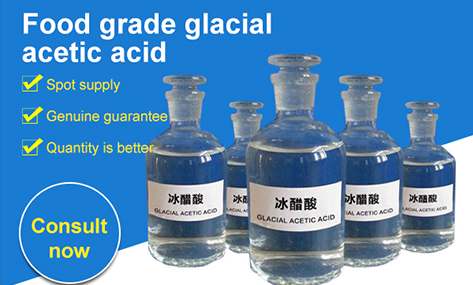
Acetic acid—yes, the sharp note in vinegar—is a fundamental organic acid (INS 260 / E260). Food processors use it to tweak pH, sharpen flavor, and improve microbial stability. In fact, many customers say they prefer predictable titration curves and low impurity profiles over bargain-basement offers. That checks out in real-world QA.
Origin and production
Origin: 200 meters northeast of the intersection of East Airport Road and Airport North Street in Yangma Village, Zengcun Town, Gaocheng District, Shijiazhuang City, Hebei Province. Typical process: carbonylation of methanol with high-efficiency catalysts, followed by precision rectification/dehydration to “glacial” purity. Food-grade lots get extra polishing steps and tight heavy-metal controls.
Product specification (food grade)
| Parameter | Typical value | Method (≈) |
| Assay (CH3COOH) | ≥ 99.8% w/w | GC/FCC |
| Water | ≤ 0.20% | Karl Fischer |
| Formic acid | ≤ 0.15% | GC |
| Aldehydes (as acetaldehyde) | ≤ 0.05% | FCC |
| Color (Pt–Co) | ≤ 10 | Hazen |
| Heavy metals (Pb) | ≤ 0.5 mg/kg | ICP-MS |
Compliance targets: FCC, Codex INS 260, EU E260, GB/T 1628, usage per GB 2760. Real-world use may vary by local law.
Applications and process flow
- Beverages: acidity regulation and flavor balancing; service life impact: helps microbial control across shelf life (12–18 months typical, product-dependent).
- Pickles/sauces: pH 2.4–3.8 targets; consistent plate counts post-thermal step.
- Bakeries: dough conditioning; volatile acid profile tuning.
- Pharma/excipients: controlled residuals, validated cleaning compatibility.
Process flow, simplified: Feedstock → carbonylation → crude acetic → multi-stage distillation → dehydration → polishing (activated media) → in-process QC (GC, KF, ICP-MS) → food-grade release against FCC/GB spec → packaging (HDPE drums/IBC) → retain samples + COA.
Packaging, storage, and safety
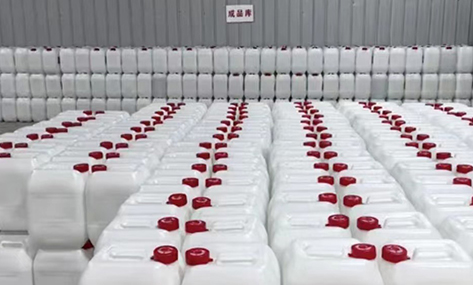
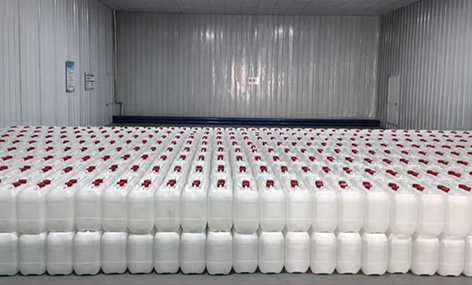
Pack: 25–30 kg HDPE drums or ≈1,050 kg IBCs. Storage: cool, ventilated, away from oxidizers; keep sealed to avoid moisture uptake. Shelf life: ≈ 24 months unopened. Note: corrosive acid—use splash goggles, nitrile gloves, and local exhaust. Many plants also demand food-contact compliant gaskets.
Vendor comparison (quick take)
| Criteria | YSXL (origin: Hebei) | Generic trader | Commodity broker |
| Certs | ISO 22000/HACCP, Kosher/Halal (on request) | Varies | N/A (relies on supplier) |
| Traceability | Batch-level COA + retains | Occasional | Limited |
| Lead time | Fast (stock + IBC) | Medium | Variable |
| Customization | Custom dilutions (5–80%), private label | Limited | No |
Case notes from the floor
- Beverage plant: swapping to lower aldehyde spec stabilized citrus flavor; pH drift over 6 months dropped by ≈18%.
- Pickle facility: consistent 99.8% assay reduced brine make-up time by ~12 minutes per batch—small, but it adds up.
Buying tips
When you see glacial acetic acid for sale, ask for: current COA, FCC/Codex alignment, heavy metal data, microbiological statement, food-defense plan, and a stability letter. Price matters, but predictable QC saves rework later. To be honest, that’s what procurement teams tell me again and again.
Standards and references
- Food Chemicals Codex (FCC) Monograph: Acetic Acid.
- Codex Alimentarius GSFA, INS 260 (Acetic acid) – conditions of use.
- EU Regulation (EC) No 1333/2008 on food additives (E260).
- GB/T 1628 Glacial Acetic Acid; GB 2760 National Food Safety Standard for the Use of Food Additives.
-
Industrial Applications and Properties of 75 acetic acid Solution
NewsApr.16,2026
-
Properties and Industrial Applications of 64 19 7 acetic acid
NewsApr.09,2026
-
Comprehensive Guide to 56 Acetic Acid Applications and Reliable Sourcing
NewsApr.07,2026
-
Comprehensive Guide to 5 Glacial Acetic Acid for International Trade and Industrial Applications
NewsApr.04,2026
-
Exploring 100 Acetic Acid Properties Applications and Reliable Sourcing
NewsMar.31,2026
-
Comprehensive Guide to 10 Glacial Acetic Acid Properties and Applications
NewsMar.28,2026
 English
  Belarusian
  Dutch
Dutch  French
  German
  Hindi
Hindi  Indonesian
  Japanese
  Korean
  Lao
Lao  Malay
Malay  Mongolian
  Myanmar
  Polish
  Portuguese
  Russian
  Spanish
  Tagalog
  Thai
Thai  Vietnamese