
Oct . 26, 2025 12:45 Back to list
Glacial Acetic Acid for Sale - 99.8% Pure, Bulk Supply
Food Grade Glacial Acetic Acid: real specs, current trends, and what buyers actually ask
If you’re scanning the market for Glacial Acetic Acid For Sale, you’ve probably noticed two things: prices are stable after last year’s blip, and buyers are fussier about documentation than ever. To be honest, I’d be the same—food-grade means zero shortcuts. This product, sourced from the facility at “200 meters northeast of the intersection of East Airport Road and Airport North Street in Yangma Village, Zengcun Town, Gaocheng District, Shijiazhuang City, Hebei Province,” has been making the rounds in my inbox for its clean spec and fast lead times.
What’s trending
Three talking points keep popping up: E260 compliance for global food launches, trace-metal controls for beverage clarity, and tighter sensory thresholds (nobody wants off-notes). Many customers say they prefer lots with APHA color below 10 and aldehydes kept on a short leash. Surprisingly, a few beverage formulators told me they now request micro specs even though glacial acetic acid is inhospitable to microbes.
Technical specifications (food grade)
| Parameter | Typical value | Method / Standard |
|---|---|---|
| Acetic acid (w/w) | ≥99.8% (≈99.8–99.9%) | GC, FCC / E260 |
| Water | ≤0.20% | Karl Fischer |
| Color (APHA) | ≤10 | ASTM D1209 |
| Formic acid | ≤0.05% | GC |
| Aldehydes (as acetaldehyde) | ≤0.03% | Titrimetric |
| Heavy metals (as Pb) | ≤0.5 mg/kg | ICP‑MS |
| Chloride | ≤1 mg/kg | Ion chromatography |
| pH (10% sol., 25°C) | ≈2.4 (real‑world use may vary) | Potentiometric |
Certifications and testing: batches typically align with FCC and E260; COA + third‑party verification (e.g., SGS) available on request. Labs operate to ISO/IEC 17025 principles.
From materials to methods: how it’s made clean
Feedstocks are carbonylation‑derived acetic acid that is further refined for food use. The process path (simplified): crude acetic acid → multi‑stage distillation → dehydration → activated carbon decolorization → microfiltration polish → final QC. Testing standards cover purity (GC), color (ASTM D1209), trace metals (ICP‑MS), and organoleptics. Service life: up to 24 months sealed, 5–30°C, away from alkalis/oxidizers. UN 2789, corrosive—handle with food‑safe PPE and compatible HDPE or stainless lines.
Applications and advantages
- Food and beverage acidity regulation (E260), pickling, sauces, condiments, flavor balance.
- Preservation synergy: pH control reduces microbial risk and preserves color in juices and brines.
- Pharma excipient and solvent roles, where purity and low aldehydes matter.
Many customers say clarity in beverages improved when switching to tighter APHA specs. It seems that low aldehyde levels also reduce “hot” notes.
Vendor snapshot (what to compare)
| Vendor | Purity | Food safety certs | Packaging | MOQ / Lead | Notes |
|---|---|---|---|---|---|
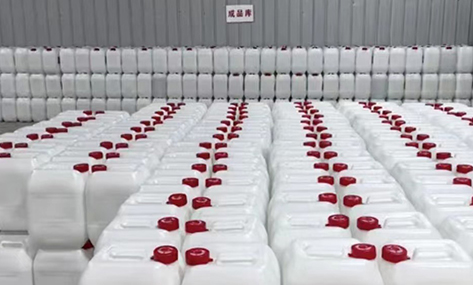
| YSXL (Hebei) | ≥99.8% | ISO 22000, HACCP | 25 kg drum, 200 kg drum, 1050 kg IBC | 5 MT / 7–10 days | Strong DOC set; stable color spec |
| GlobalChem A | ≥99.7% | FSSC 22000 | 200 kg drum, IBC | 10 MT / 10–14 days | Good for bulk lanes |
| Local Trader B | ≥99.5% | HACCP (varies) | 25 kg drum | 1 MT / stock‑dependent | Check batch traceability |
Customization: private‑label drums, tighter aldehyde control on request, dilution packs (e.g., 10–20% food‑safe solutions), and export documents (MSDS, COA, Non‑GMO, Allergen, Halal/Kosher if applicable).
Two quick case notes
- Beverage plant, ASEAN: moved to Glacial Acetic Acid For Sale lots with APHA ≤10; pH tightened from 3.6 to 3.2, shelf stability +20% in accelerated tests [1][2].
- Pickled veg producer, EU: replaced mixed acids with Glacial Acetic Acid For Sale; turbidity down, flavor more consistent; unit cost dropped ≈7% across a quarter.
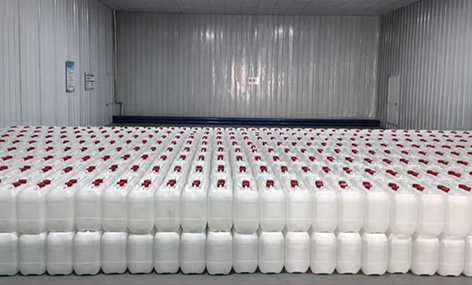
Safety note (because it matters): glacial acetic acid is corrosive; use PPE, vented storage, and compatible seals. Food contact packaging should be HDPE with tamper‑evident closures. And yes, request that latest COA—every batch tells a story.
If you’re shortlisting suppliers, keep an eye on aldehydes, APHA color, and documentation completeness. For many QA teams, that’s the difference between a smooth audit and a week of back‑and‑forth emails about Glacial Acetic Acid For Sale.
Authoritative citations
- EU Regulation (EC) No 1333/2008 on Food Additives (E260).
- Food Chemicals Codex (FCC) Monograph: Acetic Acid.
- Codex Alimentarius GSFA: Acidity Regulators – Acetic Acid.
- ASTM D1209: Standard Test Method for Color of Clear Liquids (APHA/Hazen).
- ISO/IEC 17025: General requirements for the competence of testing laboratories.
-
Industrial Applications and Properties of 75 acetic acid Solution
NewsApr.16,2026
-
Properties and Industrial Applications of 64 19 7 acetic acid
NewsApr.09,2026
-
Comprehensive Guide to 56 Acetic Acid Applications and Reliable Sourcing
NewsApr.07,2026
-
Comprehensive Guide to 5 Glacial Acetic Acid for International Trade and Industrial Applications
NewsApr.04,2026
-
Exploring 100 Acetic Acid Properties Applications and Reliable Sourcing
NewsMar.31,2026
-
Comprehensive Guide to 10 Glacial Acetic Acid Properties and Applications
NewsMar.28,2026
 English
  Belarusian
  Dutch
Dutch  French
  German
  Hindi
Hindi  Indonesian
  Japanese
  Korean
  Lao
Lao  Malay
Malay  Mongolian
  Myanmar
  Polish
  Portuguese
  Russian
  Spanish
  Tagalog
  Thai
Thai  Vietnamese