
Jan . 27, 2026 21:35 Back to list
Understanding Glacial Acetic Acid Acetic Acid Difference and Key Applications
Glacial Acetic Acid vs. Acetic Acid: Understanding the Difference
Acetic acid is a versatile chemical compound used in numerous industrial and household applications. However, it's often encountered in two forms: glacial acetic acid and standard acetic acid solutions. While both share the same chemical formula (CH₃COOH), their concentration, properties, and uses differ significantly. This article dives into the key differences between glacial acetic acid and acetic acid, providing a comprehensive overview for professionals and anyone seeking a deeper understanding of this important chemical. Understanding these distinctions is crucial for safe handling, accurate application, and optimizing performance in various processes.

What is Acetic Acid? A Foundation
Acetic acid, in its simplest form, is a colorless liquid with a distinctive vinegar-like odor. It's a weak carboxylic acid produced through both synthetic and biological processes like fermentation. Common household vinegar typically contains 4-8% acetic acid diluted in water. Industrially, acetic acid is a crucial feedstock for producing various chemicals, including vinyl acetate monomer (VAM), cellulose acetate, and acetic anhydride. It serves as a solvent, a pH regulator, and a preservative in several industries, from food processing to pharmaceuticals.
Understanding Glacial Acetic Acid
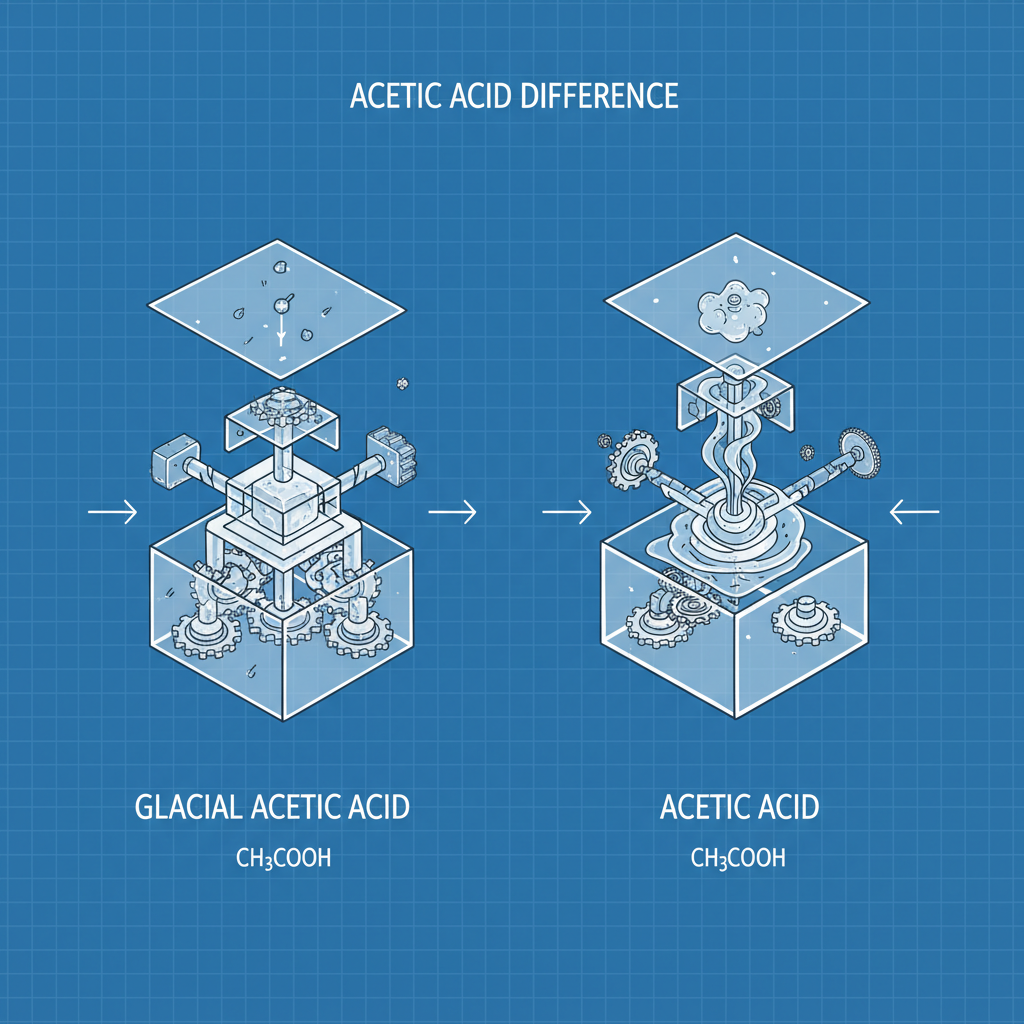
The term "glacial acetic acid" refers to highly concentrated acetic acid, typically containing 99.5-100% pure acetic acid. The name originates from its historical method of purification – slow cooling, which would cause the acetic acid to crystallize, resembling glacial ice. It’s a water-clear liquid with a very pungent, irritating odor. Due to its high concentration, glacial acetic acid is incredibly corrosive and requires extreme caution during handling. It’s primarily used in laboratory settings, chemical synthesis, and specialized industrial applications demanding a high purity, anhydrous acetic acid source. YSXL glacial acetic acid provides exceptional quality for your needs.
Key Highlight: Glacial acetic acid is essentially pure acetic acid, making it significantly more potent and reactive than diluted solutions.
Key Differences: A Side-by-Side Comparison
The core difference between glacial acetic acid and regular acetic acid lies in their concentration. This distinction dictates their properties, handling requirements, and specific applications. Here's a detailed comparison:
Safety Considerations and Handling
Due to its highly corrosive nature, glacial acetic acid demands strict safety precautions. Always wear appropriate personal protective equipment (PPE), including chemical-resistant gloves, safety goggles, and a lab coat. Work in a well-ventilated area to avoid inhaling fumes. Avoid contact with skin and eyes – in case of contact, immediately flush with copious amounts of water and seek medical attention. Store glacial acetic acid in a tightly sealed container, away from incompatible materials like strong oxidizers and bases. Refer to the Safety Data Sheet (SDS) for complete safety information. Proper handling ensures your safety and prevents accidents.
Applications in Industry and Research
Glacial acetic acid’s high purity and concentration make it indispensable in various specialized applications. It's a key reagent in the synthesis of numerous organic compounds, including pharmaceuticals, plastics, and fragrances. In the textile industry, it’s used in dyeing and finishing processes. Furthermore, it serves as a solvent in analytical chemistry and as a component in various cleaning solutions. The consistent quality of YSXL glacial acetic acid ensures reliable results in your demanding applications.
Conclusion: Choosing the Right Acetic Acid Form
Understanding the difference between glacial acetic acid and standard acetic acid solutions is vital for selecting the appropriate form for your specific needs. While diluted acetic acid serves everyday purposes, glacial acetic acid is essential for demanding industrial and research applications requiring high purity and concentration. Always prioritize safety when handling any form of acetic acid, and choose a reputable supplier like YSXL for consistent quality and reliable performance.
Frequently Asked Questions (FAQs)
Can glacial acetic acid be diluted to create standard acetic acid solutions?
Yes, glacial acetic acid can be carefully diluted with distilled water to create acetic acid solutions of various concentrations. However, this process must be conducted slowly and with extreme caution, adding the acid to the water, never the other way around, to prevent heat generation and potential splashing. Always use appropriate PPE and ensure adequate ventilation during dilution. Calculations should be precise to achieve the desired concentration, and the resulting solution should be clearly labeled.
What are the primary uses of glacial acetic acid in a laboratory setting?
In a laboratory, glacial acetic acid is extensively used as a solvent for various chemical reactions, a reagent in analytical procedures like titrations, and as a preservative for biological samples. It's also crucial in preparing acetate buffers, which are essential for maintaining pH levels in experiments. Additionally, it's used in the purification of organic compounds and as a component in some electrophoresis solutions.
Is glacial acetic acid environmentally friendly?
Glacial acetic acid is biodegradable, but its high acidity can pose environmental risks if not handled properly. Spills can lower the pH of soil and water, harming aquatic life and vegetation. Proper disposal methods, adhering to local regulations, are crucial. Neutralization of acetic acid waste before discharge is often required to minimize environmental impact. Responsible use and disposal are essential for minimizing its ecological footprint.
How should I store glacial acetic acid to maintain its purity?
Glacial acetic acid should be stored in a tightly sealed, corrosion-resistant container (typically glass or specific plastics) in a cool, dry, and well-ventilated area. Protect it from direct sunlight and sources of ignition. Avoid storing it near incompatible materials like strong oxidizers, bases, and metals. Regularly inspect the container for leaks or damage. Proper storage preserves its purity and prevents degradation.
-
Industrial Applications and Properties of 75 acetic acid Solution
NewsApr.16,2026
-
Properties and Industrial Applications of 64 19 7 acetic acid
NewsApr.09,2026
-
Comprehensive Guide to 56 Acetic Acid Applications and Reliable Sourcing
NewsApr.07,2026
-
Comprehensive Guide to 5 Glacial Acetic Acid for International Trade and Industrial Applications
NewsApr.04,2026
-
Exploring 100 Acetic Acid Properties Applications and Reliable Sourcing
NewsMar.31,2026
-
Comprehensive Guide to 10 Glacial Acetic Acid Properties and Applications
NewsMar.28,2026
 English
  Belarusian
  Dutch
Dutch  French
  German
  Hindi
Hindi  Indonesian
  Japanese
  Korean
  Lao
Lao  Malay
Malay  Mongolian
  Myanmar
  Polish
  Portuguese
  Russian
  Spanish
  Tagalog
  Thai
Thai  Vietnamese