Understanding the precise glacial acetic acid density is fundamental for chemists, food manufacturers, and industrial engineers who rely on the purity of anhydrous acetic acid. In the food additive industry, where precision governs both safety and taste, the density of this concentrated acid serves as a primary indicator of purity and concentration, ensuring that formulated products maintain consistent quality across global batches.
Globally, the demand for high-purity food-grade glacial acetic acid has surged, driven by the expansion of the processed food sector and the need for effective acidification and preservative agents. When professionals calculate the glacial acetic acid density, they are not just measuring mass per volume; they are validating the integrity of a raw material that impacts the shelf life and safety of millions of consumer products.
However, managing this substance presents challenges, as its density is highly sensitive to temperature fluctuations and moisture contamination. Mastering the nuances of glacial acetic acid density allows companies to optimize their logistics, reduce waste during titration, and adhere to strict ISO and food safety standards, ultimately bridging the gap between raw chemical supply and high-end culinary application.
The Fundamental Concept of Glacial Acetic Acid Density
Glacial acetic acid density refers to the mass of the anhydrous acetic acid per unit volume, typically measured at a standard temperature of 20°C. The term "glacial" is derived from the acid's tendency to freeze into ice-like crystals just below 16.6°C, a physical property that is intrinsically linked to its high purity and specific glacial acetic acid density.
In technical terms, a density value close to 1.049 g/cm³ signifies a product that is nearly 100% pure. When this value deviates, it often indicates the presence of water or other impurities, which can drastically alter the chemical reactivity and the effectiveness of the acid as a food additive or industrial solvent.
Global Industrial Relevance of Density Metrics
From a global perspective, the standardization of glacial acetic acid density is critical for international trade. According to ISO standards, precise density measurements ensure that buyers in Europe, North America, and Asia receive a consistent product regardless of the manufacturing origin. This consistency is vital for the pharmaceutical and food industries, where a deviation of even 0.01 g/cm³ can lead to failed batch tests.
The challenge arises in the logistics of transporting these chemicals across varying climates. Because density changes with temperature, shipping companies must implement strict thermal controls to prevent the acid from crystallizing or expanding, which would complicate the volume-to-mass calculations used for customs and billing.
Furthermore, in emerging markets, the ability to accurately verify the glacial acetic acid density serves as a safeguard against adulteration. By utilizing digital densitometers, quality control officers can instantly confirm the purity of the shipment, ensuring that the food-grade standards required for human consumption are strictly met.
Core Factors Affecting Density Stability
The most influential factor affecting glacial acetic acid density is temperature. As the temperature rises, the liquid expands, leading to a decrease in density. This inverse relationship requires lab technicians to use precise temperature compensation formulas to normalize readings to 20°C for accurate comparison.
Another critical component is moisture content. Acetic acid is hygroscopic, meaning it readily absorbs water from the air. The introduction of water molecules changes the molecular packing of the liquid, thereby altering the glacial acetic acid density and lowering the concentration from "glacial" to a dilute solution.
Finally, the presence of dissolved gases or trace organic impurities can cause slight fluctuations. While less impactful than temperature or water, these factors can interfere with high-precision measurements in analytical chemistry, making rigorous sealing and filtration processes essential to maintain a stable glacial acetic acid density.
Practical Applications in Food Manufacturing
In the food industry, the glacial acetic acid density is utilized to calculate the exact amount of acid needed for pickling, seasoning, and pH regulation. Because food manufacturers often purchase the acid by weight but dispense it by volume, knowing the exact density is the only way to ensure that the acidity levels remain consistent across different production lots.
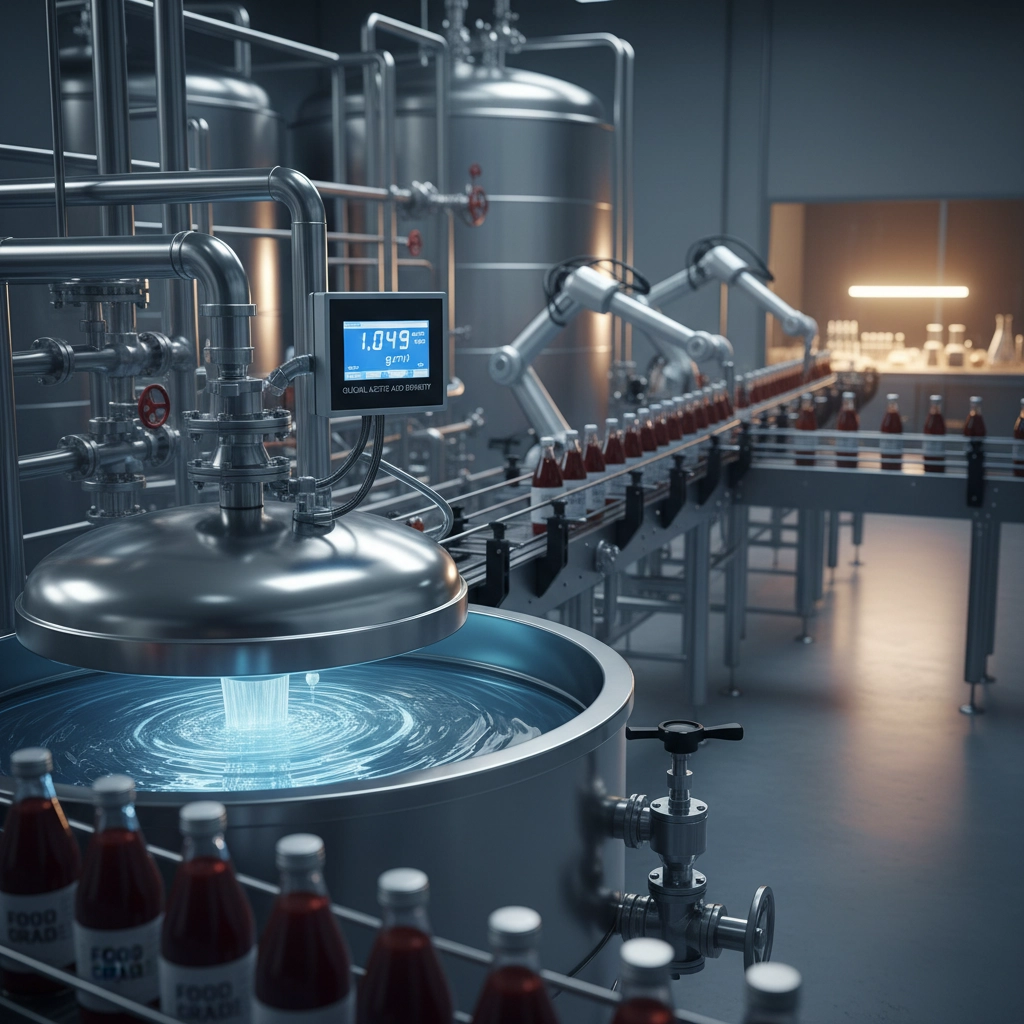
Beyond simple mixing, density monitoring is used in automated dosing systems. High-precision sensors measure the density of the incoming stream to automatically adjust the flow rate, ensuring that the final food product meets regulatory standards for acidity without wasting expensive raw materials.
Comparison of Density Measurement Accuracy by Method
Economic and Logistics Value of Precise Measurement
From a cost-efficiency perspective, an accurate understanding of glacial acetic acid density allows for the optimization of storage tank capacities. When companies know the exact volume-to-weight ratio, they can maximize their storage footprints and reduce the number of required shipments, significantly lowering the carbon footprint of their supply chain.
Moreover, the reliability of density data fosters trust between suppliers and manufacturers. When a shipment's glacial acetic acid density matches the certificate of analysis perfectly, it eliminates the need for time-consuming disputes and re-testing, accelerating the production cycle and enhancing operational agility.
Future Innovations in Density Monitoring
The future of monitoring glacial acetic acid density lies in the integration of IoT and real-time sensing. We are seeing a shift toward "Smart Tanks" equipped with continuous-flow density sensors that feed data directly into cloud-based ERP systems. This allows managers to monitor purity levels in real-time, detecting contamination the moment it occurs.
Sustainability is also driving innovation. New, non-destructive laser-based density measurement tools are replacing traditional chemical titration, reducing the amount of waste generated during quality control. These advancements ensure that the glacial acetic acid density can be verified without consuming any of the product.
Furthermore, AI-driven predictive modeling is being used to forecast how density will change based on weather patterns during transit. By analyzing historical data, these systems can suggest the optimal time to unload a shipment to ensure the glacial acetic acid density is at its most stable state for immediate processing.
Overcoming Common Density Measurement Challenges
One of the primary challenges in maintaining a consistent glacial acetic acid density is the risk of crystallization in measuring equipment. When the acid cools, crystals can form on the walls of the densitometer, leading to skewed readings. To solve this, many industrial plants are now implementing heated sampling lines that keep the acid slightly above its freezing point.
Another limitation is the human error associated with manual sampling. To mitigate this, companies are transitioning to automated, closed-loop sampling systems. These systems extract the sample, regulate its temperature, and measure the glacial acetic acid density without exposing the liquid to atmospheric moisture.
Finally, for smaller operations that cannot afford high-end digital tools, the use of precision-calibrated hydrometers combined with strict temperature-correction charts provides a reliable, cost-effective solution. The key is the rigor of the process—standardizing the environment to ensure the glacial acetic acid density is measured under identical conditions every time.
Analysis of Density Measurement Methods and Their Industrial Efficacy
| Measurement Method |
Precision Level |
Operational Speed |
Impact on Glacial Acetic Acid Density Accuracy |
| Digital Densitometer |
Very High |
Instant |
Minimal error, automated correction |
| Pycnometer |
High |
Slow |
High accuracy, high manual labor |
| Hydrometer |
Moderate |
Fast |
Prone to temperature deviation |
| Refractometer |
Moderate |
Instant |
Indirect correlation to density |
| Coriolis Meter |
Very High |
Continuous |
Perfect for real-time flow density |
| Manual Titration |
High |
Very Slow |
Measures concentration, not density |
FAQS
The standard density for high-purity glacial acetic acid is approximately 1.049 g/cm³ at 20°C. Any significant deviation from this value usually indicates a change in concentration or the presence of impurities, such as water, which lowers the density of the liquid.
Temperature has a direct inverse effect on density. As the acid warms, the molecules move further apart, decreasing the glacial acetic acid density. This is why professional labs use temperature-controlled baths or electronic compensation to ensure readings are standardized to 20°C.
Yes, a hydrometer is a common tool for checking density. However, it is less precise than digital methods and highly sensitive to temperature. To get an accurate purity reading, you must measure the temperature of the liquid and apply a correction factor to the hydrometer's reading.
In food production, consistency is key to safety and flavor. Since density correlates directly with purity and concentration, it allows manufacturers to calculate precise dosages. This ensures that preservatives are effective and that the product remains within legal acidity limits.
Because water has a lower density (approx 1.00 g/cm³) than glacial acetic acid, the absorption of moisture will decrease the overall glacial acetic acid density. This indicates that the acid is no longer "glacial" and has become a diluted solution.
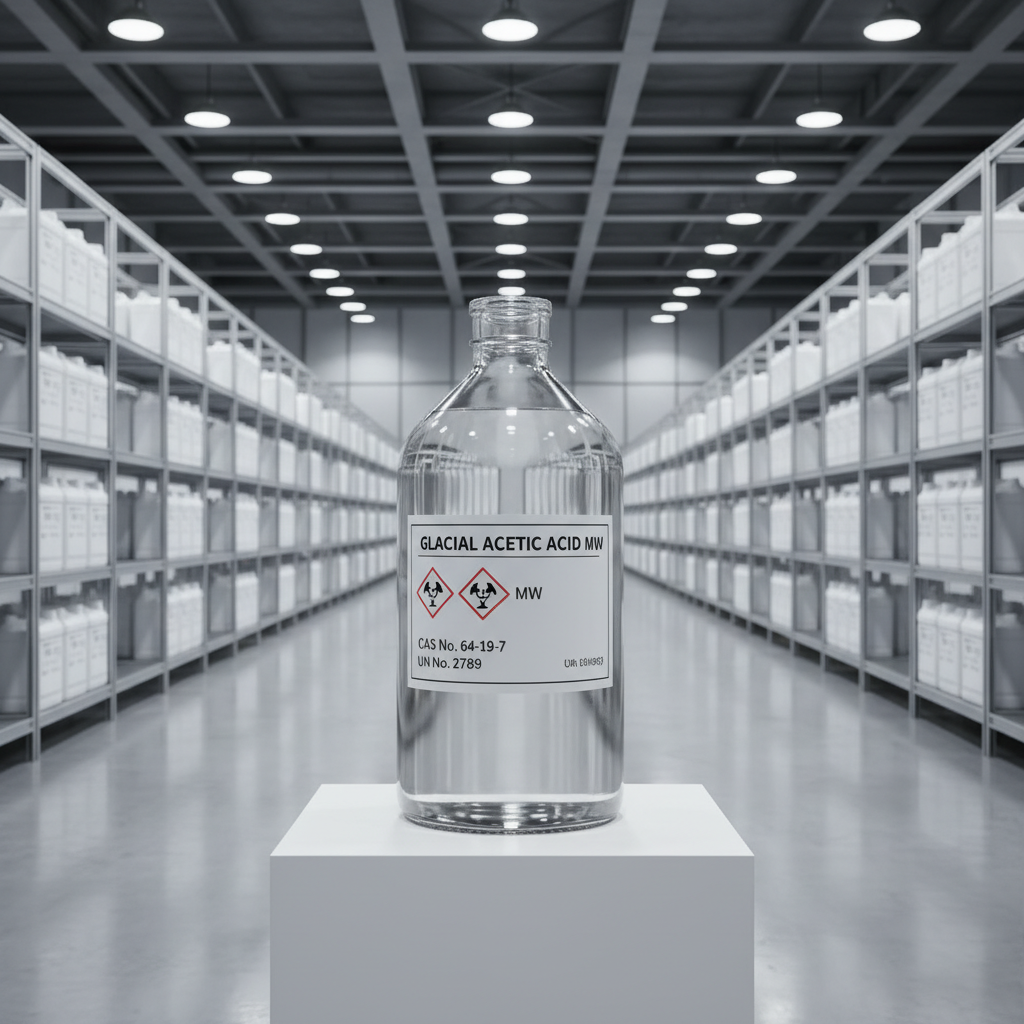
To maintain a stable density, store the acid in airtight, moisture-proof containers in a temperature-controlled environment. Avoiding extreme temperature swings prevents both crystallization and expansion, ensuring the product remains consistent from the factory to the production line.
Conclusion
Mastering the technical aspects of glacial acetic acid density is more than a laboratory requirement; it is a critical component of industrial quality assurance. From the initial shipment to the final food product, the ability to accurately measure and maintain this density ensures purity, optimizes costs, and guarantees the safety of the end consumer. By understanding the roles of temperature and moisture, and by adopting modern sensing technologies, manufacturers can transform a dry chemical parameter into a competitive advantage.
As the industry moves toward greater automation and sustainable practices, the integration of real-time density monitoring will become the standard. We encourage food manufacturers and chemical distributors to invest in high-precision measurement tools and rigorous standardization protocols to ensure their supply chains remain resilient. For premium, high-purity food-grade solutions and expert technical support, visit our website: www.ysxlglacialaceticacid.com.


 English
  Belarusian
  Dutch
Dutch  French
  German
  Hindi
Hindi  Indonesian
  Japanese
  Korean
  Lao
Lao  Malay
Malay  Mongolian
  Myanmar
  Polish
  Portuguese
  Russian
  Spanish
  Tagalog
  Thai
Thai  Vietnamese